
Every afternoon in Shillong, thousands of ticket holders wait for two numbers. Those numbers do not appear by magic. They are produced by a real organisation, at a real venue, under a real legal framework. If you have ever wondered who organises Shillong teer, this guide gives you the full picture: the association that conducts the draw, the government department that regulates it, and the people who run the ground-level operation every single playing day.
Understanding the organiser matters more than most players realise. It tells you why the game is legal in Meghalaya, who is accountable when something goes wrong, and how to tell an authorised ticket counter from an impostor. By the end of this guide, you will know exactly which body runs Shillong teer, how it is supervised, and what each layer of the organisation does.

Who Organises Shillong Teer? The Short Answer
The Shillong teer draw is organised by the Khasi Hills Archery Sports Association, a registered body of archery clubs in Shillong. The association conducts the shooting sessions at the Polo Ground, counts the arrows, declares the first round and second round results, and manages the network of authorised ticket counters. It operates under the betting and lottery laws of the state of Meghalaya, which means the game is a legal, tax-paying lottery rather than an underground gamble.
So the honest one-line answer to who organises Shillong teer is this: a private archery association runs the game, and the Meghalaya state government licenses and regulates it. Those two halves, the organiser and the regulator, are different bodies with different jobs, and mixing them up is the most common misunderstanding about teer.
Why There Are Two Halves to the Answer
Think of it the way you would think of a football league. The clubs and their association run the matches. A separate sports authority sets the rules and keeps things fair. Teer works the same way. The Khasi Hills Archery Sports Association handles the practical work of the draw, while the state government’s taxation and excise machinery handles licensing, revenue collection, and legal oversight. Both are essential. Neither can replace the other.
This split is also why you will sometimes see the organiser described in different ways online. Some sources call it an association, some call it a club body, and some refer to the government department. They are all pointing at different layers of the same structure. The sections below walk through each layer in turn, starting with the association itself.
The Khasi Hills Archery Sports Association
The Khasi Hills Archery Sports Association is the teer conducting authority for the Shillong day game. It is a collective of traditional archery clubs from the Khasi Hills region, and its members are the archers you see on the ground. The association’s job covers everything that happens between the first ticket sale of the day and the declaration of the second round result.
The name sometimes appears in slightly different forms, such as Khasi Hills Archery Sports Club or Institute, in older references and casual writing. These variations all point to the same body. What matters is the function: this is the organisation that owns the draw, staffs it, and stands behind the numbers that appear on result boards every playing day.
What the Association Actually Does
The association’s work falls into four practical areas. First, it maintains the pool of licensed archers and organises them into shooting teams for each session. Second, it runs the venue, the Polo Ground in Shillong, including the targets, the shooting schedule, and the officials who supervise play. Third, it manages the ticket side of the business: authorising counters, supplying ticket books, and collecting the stakes. Fourth, it declares the results, which means counting the arrows on the targets, deriving the two-digit numbers for the first and second rounds, and announcing them to counters and the public.
None of this is informal. The draw follows a fixed procedure every day, with the same sequence of shooting, counting, and declaration. That routine is what makes the results trustworthy: anyone who watches the ground on a playing day can see the process happen in the open.
How the Association Is Run
Like most sports associations, the Khasi Hills body is run by elected office bearers drawn from its member clubs. The member clubs are traditional archery groups from around the Khasi Hills, and the association represents their collective interest. Day-to-day operations are handled by appointed officials who manage the ground, the counters, and the accounts.
This structure explains something that puzzles newcomers: why teer feels both like a sport and like a lottery. It is both. The association is genuinely an archery body with real athletes, and the lottery layer sits on top of their sport. The archers are not actors and the shooting is not staged. The competitive element is real, which is exactly why the state government was willing to license the game in the first place.
The Meghalaya Government’s Regulatory Role
The second half of the answer to who organises Shillong teer is the state of Meghalaya itself. Teer is legal in Meghalaya because the state government permits and regulates archery-based betting under its amusement and betting tax laws. The relevant machinery sits within the state’s taxation department, which handles the licensing of teer organisers and the collection of tax revenue from the game.
This is a crucial point for anyone who plays. Teer is not legal everywhere in India. It is legal in Meghalaya because Meghalaya chose to regulate it, tax it, and supervise it. The Meghalaya teer department framework, meaning the state’s tax and excise administration, is what separates the Shillong game from illegal gambling operations elsewhere.
The Legal Framework in Plain Terms
Meghalaya regulates teer under its laws governing amusements and betting. The organiser must hold the appropriate permissions, follow the prescribed procedures, and pay the taxes due on the game’s turnover. The government, in turn, gets a regulated revenue stream and a legal basis for shutting down unauthorised operators who try to run copycat games without a license.
For players, the practical meaning is simple. A ticket bought at an authorised counter in Shillong is a ticket in a state-regulated lottery. The same game run by an unlicensed operator, online or offline, outside this framework, does not carry the same legal protection. Knowing who the authorised organiser is protects you from fakes.
Taxes, Records, and Accountability
Because the game is taxed, it leaves a paper trail. The association keeps records of ticket sales and payouts, and the government collects its share. This accountability is one of the strongest arguments for the regulated model. Every rupee of tax paid is a rupee that the state can verify against the organiser’s books, which makes large-scale manipulation far harder than it would be in an unregulated setup.
You can read more about how the state views regulated lotteries on the Meghalaya government portal, and the general background of the game is covered on Wikipedia’s teer article. Both are useful if you want to go beyond this guide.
Who Organises Shillong Teer Draws at the Polo Ground Each Day
So far we have covered the association and the government. Now let us zoom in on the actual draw, because the question of who organises Shillong teer becomes most concrete at the Polo Ground on a playing afternoon. Three groups of people make the draw happen: the officials, the archers, and the counting team.
The Officials on the Ground
The association appoints officials who supervise each session. They set up the targets, verify that the right archers are on the shooting line, enforce the shooting sequence, and oversee the counting. They are the referees of the game. Their presence is what turns a group of archers shooting arrows into an official, auditable draw.
The Archers
The archers are members of the association’s affiliated clubs. They shoot with traditional bamboo bows at straw targets from a fixed distance, and each archer looses a set number of arrows per round. These are skilled traditional archers, and many have been shooting competitively for years. The result of the draw depends entirely on how many of their arrows hit and stick in the targets.
The Counting Team
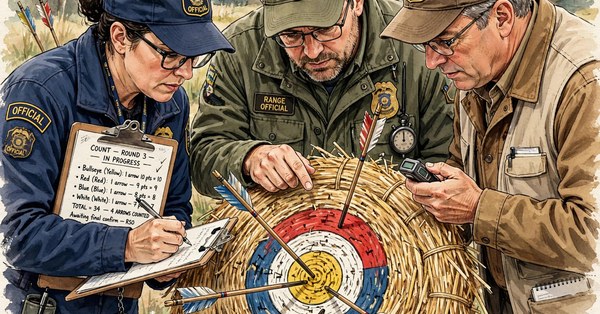
After each round, officials walk to the targets and count every arrow that struck and stayed in the straw. Misses do not count. The total across all targets is tallied, and the last two digits of that total become the declared number for the round. This happens twice per session, once for the first round and once for the second round. The counting is done in the open, at the ground, which is why the Polo Ground sessions have a reputation for transparency.
If you want to follow the daily numbers from this draw, the Shillong teer result page carries the declared FR and SR figures, and the full result list covers every session of the day.

Ticket Counters and Agents: The Public Face of the Organiser
Most players never visit the Polo Ground. Their entire experience of the organiser is the ticket counter where they buy their tickets. These counters are the retail arm of the association’s operation, and understanding how they fit into the structure helps you buy safely.
Authorised counters receive ticket books from the association and sell tickets for the day’s rounds. Each ticket carries the buyer’s chosen two-digit number. The counter collects the stakes, keeps its commission, and passes the rest up the chain. Winnings are paid out through the same counters, which is why players are always advised to keep their tickets safe and buy only from counters they trust.
Here is the practical rule: an authorised counter operates openly, issues proper tickets, and pays out published results without argument. If a seller cannot show you a real ticket, pressures you to pay through an unofficial channel, or offers “guaranteed” numbers, walk away. The real organiser never guarantees numbers. The game is a lottery, and every two-digit combination has the same chance on any given day.
Teer is a legal lottery in Meghalaya for adults aged 18 and above. Play responsibly, set a strict budget, and never chase losses.
Why Knowing the Organiser Matters for Players
You might wonder whether any of this changes how you play. It changes three things. First, it tells you where to check results. Numbers published by the association’s own channels and reputable result publishers reflect the official draw. Second, it tells you who to hold accountable. If a counter refuses to pay a winning ticket, the association is the body to complain to. Third, it protects you from scams. Anyone claiming to be a separate “official” teer organiser, anyone selling predictions in the association’s name, and anyone running a lookalike game without a Meghalaya license is not part of the real structure.
This knowledge also helps you read the news about teer sensibly. When reports mention the association, they are talking about the Khasi Hills body. When they mention the government, they are talking about regulation and tax. Keeping the two straight stops a lot of confusion.
There is one more practical benefit. Result publishers on the internet are not the organiser. Websites and apps that list teer numbers, including this one, simply republish what the association declares. That is why serious players cross-check numbers across more than one publisher before treating a figure as final. The organiser declares the result once, at the ground; everything else is republication. Knowing this chain, from ground to counter to publisher, helps you judge which sources to trust when two sites disagree for a few minutes after declaration.
For a broader look at how this organiser’s game compares with neighbouring markets, see our Juwai teer result coverage, and for background on this site, visit our about page.
Frequently Asked Questions
Who organises Shillong teer?
The Khasi Hills Archery Sports Association organises the Shillong teer draw. It is a registered association of traditional archery clubs from the Khasi Hills region, and it conducts the shooting sessions at the Polo Ground in Shillong, manages ticket counters, and declares the first round and second round results. It operates under license from the Meghalaya state government.
Is Shillong teer run by the government?
Not directly. The game is conducted by the Khasi Hills Archery Sports Association, which is a private body. The Meghalaya government regulates and taxes the game under the state’s amusement and betting laws. So the association runs the draw, and the government supervises it. Both roles are real, but they belong to different organisations.
Where is Shillong teer conducted?
The main Shillong day game is conducted at the Polo Ground in Shillong, Meghalaya. The archers shoot at straw targets on the ground, officials supervise the session, and the counting and declaration happen on site. Morning and night teer sessions are conducted by different associations at different venues.
What is the teer regulatory body in Meghalaya?
Regulation sits with the Meghalaya state government’s taxation administration, which licenses teer organisers and collects betting tax under the state’s amusement and betting laws. Players sometimes go looking for a single “Meghalaya teer department,” but the function lives inside the state’s taxation administration rather than a standalone department. The Khasi Hills Archery Sports Association is the conducting body; the government is the regulatory body. Together they form the legal framework that makes Shillong teer a lawful lottery.
Can anyone organise a teer game?
No. Running a teer-style betting game without the proper Meghalaya license is illegal. Only authorised associations operating under the state’s framework can conduct the game lawfully. Unlicensed operators, including many online copycats, have no legal standing, and tickets bought from them carry no protection.
Are teer result websites the organiser?
No. Result websites and apps only republish the numbers that the Khasi Hills Archery Sports Association declares at the Polo Ground. They are not part of the conducting body and they have no role in the draw. Use them for convenience, but remember that the association’s declaration at the ground is the original source.
How can I verify that a ticket counter is authorised?
Buy from counters that operate openly in established locations, issue proper printed tickets, and pay out against published results without dispute. Authorised counters are part of the association’s retail network. Be wary of sellers who operate only through messaging apps, refuse to issue tickets, or promise guaranteed winning numbers, since the real organiser never guarantees results.
A Final Word
Who organises Shillong teer is not a mystery once you see the structure: the Khasi Hills Archery Sports Association conducts the draw at the Polo Ground, the Meghalaya government licenses and regulates it, and a network of authorised counters brings the game to the public. That three-layer setup, organiser, regulator, and retail network, is what makes the game legal, accountable, and worth trusting. Keep this map in mind the next time you buy a ticket or check a result, and you will always know exactly whose numbers you are reading.