
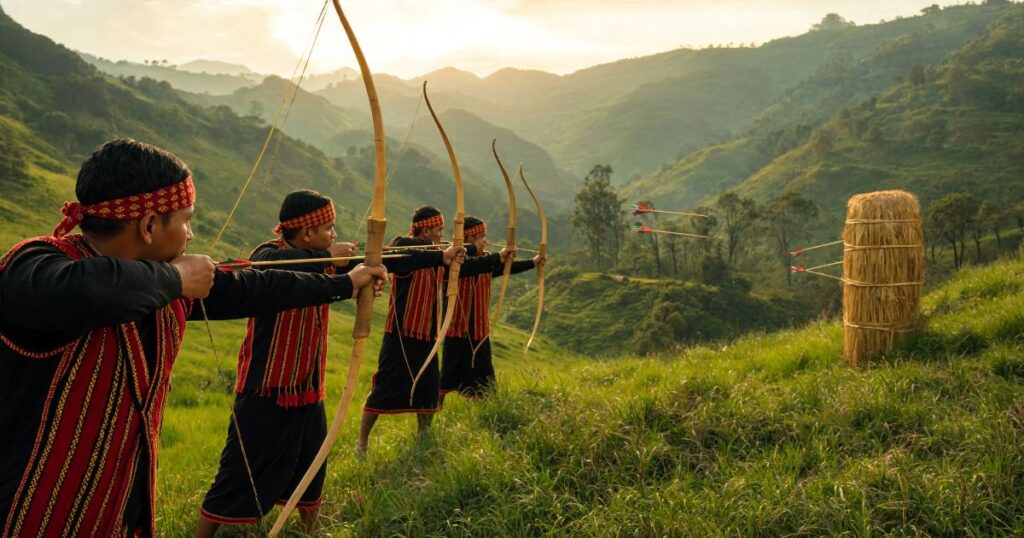
Teer is a traditional archery-based activity associated especially with Meghalaya in northeastern India. The word “teer” comes from the Hindi word for an arrow, while in Meghalaya the term is commonly associated with organized arrow-shooting events whose results are expressed as numbers. If you are searching for what is teer results, it is important to understand that the result comes from an actual archery event rather than from a conventional computerized lottery draw. World Archery describes Shillong Teer as an archery tradition practiced by local communities for decades.
Today, Teer is widely discussed online because people look for daily and previous results. However, Teer has a deeper cultural and sporting background. The activity combines traditional archery, organized competitions, numerical results, and a regulated betting system in Meghalaya.
This guide explains what Teer is, how its results are produced, its history, the role of archery, common Teer terminology, different forms of Teer, and important points readers should understand before searching for Teer information.
What Is Teer Results?
Teer results are the official numerical outcomes associated with organized Teer archery rounds. In the best-known Shillong format, archers shoot arrows toward a target, officials count the arrows that hit the target, and the final result is represented by the last two digits of the official count. World Archery describes this as a distinctive combination of traditional archery and a number-based betting system.
For example, if an official arrow count ends in a particular two-digit number, that two-digit figure becomes the announced result. The number therefore comes from the physical archery activity rather than being randomly generated by a computer.
It is useful to distinguish between Teer as archery and the betting activity connected with Teer. The Meghalaya government has specific legislation regulating arrow shooting and the sale of Teer tickets, showing that the activity has a particular legal framework within the state.
For younger readers, it is especially important to treat Teer as an informational subject rather than something to participate in for money. Gambling can carry financial and personal risks.
What Does the Word Teer Mean?
The word Teer literally refers to an arrow in Hindi. This meaning is closely connected with the activity because traditional bows and arrows are central to the archery event.
In Meghalaya, however, Teer has developed a meaning that goes beyond the ordinary definition of an arrow. It can refer to the organized archery event and the numerical results produced from that event.
World Archery notes that the word Teer means arrow and explains that Shillong Teer developed from a longstanding archery tradition in Meghalaya.
This connection between language, culture, and sport is one reason Teer is unusual. Someone unfamiliar with the subject might see searches for “Teer result” and assume they refer to a normal lottery. In reality, the results are connected to a physical archery event.
Understanding the original meaning helps explain why archery remains central to the identity of Teer.
What Is Shillong Teer?
Shillong Teer is the most widely known form of Teer associated with Meghalaya. It takes place in Shillong, the capital of Meghalaya, and is connected with the region’s long-established Khasi archery traditions.
According to World Archery, Shillong Teer is practiced by local communities and is organized through archery institutions. The event has become particularly well known because its results are followed by people interested in the numerical outcomes.
The event is distinctive because the result is derived from the number of arrows that hit the target. This creates a direct connection between the physical archery performance and the number eventually displayed as the result.
Shillong Teer should therefore not be described simply as an ordinary lottery. Its underlying event is archery, while the numerical result has historically been connected with a regulated betting system.
For informational websites, explaining this distinction clearly can help readers understand the subject without confusing the cultural activity with other types of number games.
How Does a Teer Result Come From Archery?
A Teer result begins with an organized arrow-shooting session. Archers use traditional bows and arrows and shoot toward a designated target. After the shooting is completed, officials determine the number of arrows that successfully hit the target.
The official count is then used to produce the numerical result. The commonly described system takes the final two digits of the arrow count. World Archery gives examples of results being displayed as two-digit numbers after the archery rounds.
A simplified example can make the concept easier to understand. Suppose an official count ended with the number 42. The displayed result would be 42. The important point is that the number originates from the arrow count.
This process makes Teer different from a typical electronic lottery draw. The physical performance of the participating archers is an essential part of determining the outcome.
Exact schedules, participating clubs, and administrative procedures can change, so readers should rely on current official announcements when looking for up-to-date information.
Why Are Teer Results Usually Two Digits?
Teer results are commonly represented using two digits because the result system focuses on the ending digits of the official arrow count.
For instance, an arrow count ending in 07 would be represented as 07, while a count ending in 63 would be represented as 63. This explains why Teer result lists frequently contain numbers from 00 through 99.
The two-digit format also makes results easy to display on boards, websites, charts, and other information sources.
However, the simplicity of the number should not create the impression that a person can reliably predict it. The outcome depends on the actual archery session and official counting process. Historical results cannot guarantee future outcomes.
This is an important distinction for anyone researching Teer. Previous result charts can describe what happened in the past, but they should not be treated as a reliable method for determining future results.
What Is the First Round and Second Round?
Many Teer events, particularly Shillong Teer, are associated with multiple rounds. Online result pages commonly use abbreviations such as FR and SR to distinguish the rounds.
FR generally means First Round, while SR means Second Round. Each round produces its own numerical outcome because the arrows are counted separately.
The two-round structure is one reason people searching for Teer information may see two numbers on a daily result page. Instead of one result, a page may display a first-round number and a second-round number.
The exact timing and administrative arrangements can vary, so readers should not assume that an old schedule applies permanently. Current information should always be checked against an authoritative announcement.
For an informational website, explaining FR and SR is useful because these abbreviations frequently appear in Teer-related searches and result tables.
The History of Teer in Meghalaya
Archery has deep cultural roots in Meghalaya, particularly among Khasi communities. World Archery describes Shillong Teer as an ancient archery tradition in northeastern India and notes that local tribes have practiced the activity for decades.
The modern Teer system developed over time from traditional archery activities. Historical accounts describe archery contests taking place in and around Shillong before the present result-based format became established.
The Meghalaya government later introduced legislation specifically addressing arrow shooting and the sale of Teer tickets. The Meghalaya Regulation of the Game of Arrow Shooting and the Sale of Teer Tickets Act, 2018 provides a formal legal framework for the activity.
This history demonstrates why Teer should be understood within its regional context. It is not simply an internet-based number phenomenon. Its origins are connected to a real sporting and cultural tradition involving archery.
That historical background is important when explaining the meaning of Teer to people who encounter the term for the first time.
Why Is Archery Important to Teer?
Archery is the foundation of Teer. Without the arrow-shooting event, there would be no traditional Teer result in the format associated with Meghalaya.
The region has a longstanding relationship with bows and arrows, and archery has played an important role in local cultural traditions. Modern Teer has preserved part of that connection by using actual arrow shooting as the basis for its numerical results.
The sporting aspect also distinguishes Teer from conventional lottery systems. A conventional lottery may use numbered balls, electronic systems, or other random-selection methods. Teer results originate from a physical archery activity.
World Archery has highlighted Shillong Teer’s unusual combination of traditional archery and a numerical betting system.
For readers researching what is teer results, this is perhaps the most important concept to understand: the result is linked to an archery count.
How Are Teer Results Announced?
After an organized round of shooting, officials determine the relevant arrow count and announce the corresponding numerical result.
The result is generally presented as a two-digit number. Websites that publish Teer information may show the first-round and second-round outcomes separately.
Because online pages can contain errors, delays, or outdated information, readers should distinguish between an official announcement and an independently published website update. Some websites describe themselves as official, but that claim should not automatically be accepted without verification.
For accurate research, authoritative sources such as Meghalaya government publications and recognized archery organizations are more useful for understanding the legal and historical background.
A result page should ideally display the date, event name, round, and result clearly. This helps users understand exactly which event a number refers to.
What Is a Teer Result Chart?
A Teer result chart is a historical table that records previously announced numerical outcomes. Such charts may organize results by date and round.
For example, an informational chart might contain columns such as:
- Date
- First Round
- Second Round
- Event name
- Location
Historical charts can be useful for understanding how results have been documented over time. They can also make large amounts of historical information easier to read.
However, a chart is a record of past events, not a guarantee of future outcomes. Past numbers do not establish a dependable method for predicting a future result.
This distinction is particularly important because online discussions sometimes make unsupported claims about patterns, “sure numbers,” or guaranteed outcomes. Such claims should be treated skeptically.
A high-quality Teer information website should focus on accurate historical reporting rather than promising certainty about future results.
What Is Juwai Teer?
Juwai Teer is another Teer-related archery event associated with Meghalaya. It is separate from Shillong Teer, although both are connected with the broader tradition of organized archery and numerical results.
World Archery specifically identifies Juwai Teer and Khanapara Teer as variants alongside Shillong Teer.
Because different Teer events can have different locations, organizers, schedules, and result procedures, readers should avoid assuming that information about one event automatically applies to another.
When writing about Juwai Teer, a useful article should clearly identify the event rather than combining all Teer results into one category.
The wider popularity of Teer-related searches has created many websites that publish daily and historical information. Readers should check dates carefully because similar terminology can make different events appear confusingly alike.
What Is Khanapara Teer?
Khanapara Teer is another archery-based Teer event associated with Meghalaya. It is named after the Khanapara area and is distinct from Shillong Teer and Juwai Teer.
World Archery identifies Khanapara Teer as one of the variants of the broader Teer tradition.
The existence of several Teer events explains why people searching for Teer results may encounter multiple result categories. Each event should be identified by its proper name, date, and round.
For accurate information, readers should not mix a Shillong result with a Khanapara or Juwai result. Doing so can lead to incorrect reporting.
From an SEO and informational perspective, separate pages for different Teer events can be useful when they provide genuinely different and accurate information. Each page should explain the event clearly rather than simply repeating the same content with different keywords.
Is Teer a Sport, Lottery, or Gambling Activity?
The answer depends on which aspect of Teer is being discussed.
At its foundation, Teer involves traditional archery. The numerical result is generated from the outcome of an arrow-shooting session. At the same time, the modern Teer system in Meghalaya has historically been associated with regulated betting.
The Meghalaya Regulation of the Game of Arrow Shooting and the Sale of Teer Tickets Act, 2018 specifically regulates arrow shooting and Teer ticket sales.
Therefore, describing Teer as only a sport leaves out an important part of its modern history, while describing it only as gambling ignores its archery foundation.
For educational purposes, the most accurate description is that Teer is a traditional archery-based activity that has developed a regulated numerical betting component in Meghalaya.
Because gambling involves financial risk, younger people should not participate in betting activities. Educational information about Teer is different from encouraging participation.
What Makes Teer Different From a Normal Lottery?
Teer differs from many conventional lotteries because its numerical result is connected to a real-world archery event.
In a typical lottery, a draw might involve numbered balls, computerized randomization, or another dedicated random-selection mechanism. Teer instead uses the number of arrows hitting a target during an organized session.
The distinction is significant because it explains the cultural importance of Teer. The activity is rooted in archery rather than being created solely as a number-drawing system.
Another important difference is that Teer has a specific regional history in Meghalaya. World Archery describes the activity as part of the state’s longstanding archery culture.
Although the numerical results may look similar to lottery results when displayed online, the underlying process is different. Readers should therefore avoid using generic lottery explanations when describing Teer.
Why Do People Search for Teer Results?
People search for Teer results for several reasons. Some readers are interested in Meghalaya’s traditional archery culture, while others want to understand how the numerical results are produced.
Searches may include phrases such as:
- Teer result
- Teer result today
- Shillong Teer result
- Teer previous result
- Teer result list
- First Round Teer result
- Second Round Teer result
- Meghalaya Teer
Search interest has grown because results are frequently discussed online and published shortly after announcements.
However, a responsible information site should avoid presenting results as guaranteed opportunities for profit. It should instead provide factual information about the event, its history, and the officially reported outcomes.
This approach also makes content more useful for readers who are researching Teer as a cultural or sporting phenomenon.
How Should Readers Understand Previous Teer Results?
Previous Teer results are historical records. They show what happened on earlier dates, but they do not provide certainty about future results.
A common mistake is to assume that repeated numbers, unusual sequences, or historical frequencies can guarantee what will happen next. There is no reliable basis for treating past outcomes as a guaranteed prediction of a future result.
A responsible reader should therefore use historical information only for understanding the history and documentation of the event.
When reviewing a previous result, consider:
- The exact date.
- The name of the Teer event.
- The round.
- The officially reported result.
- Whether the information comes from a reliable source.
This approach helps prevent confusion between different Teer events and different dates.
For an SEO-focused website, presenting historical results accurately is more valuable than making unsupported claims about future outcomes.
Legal Regulation of Teer in Meghalaya
Teer has a specific legal history in Meghalaya. The state enacted the Meghalaya Regulation of the Game of Arrow Shooting and the Sale of Teer Tickets Act, 2018, which regulates arrow shooting and the sale of Teer tickets.
The legislation defines arrow shooting as a game using traditional bows and arrows and establishes rules concerning licensed organization and ticket sales.
The broader Meghalaya gaming framework also specifically refers to Teer as being regulated under the 2018 arrow-shooting legislation.
Legal rules can change, and laws may apply differently depending on location, age, and circumstances. Therefore, readers should not interpret an article about Teer as legal advice or as permission to participate in betting.
For an informational article, the safest approach is to explain that Teer operates within a particular regulatory framework while encouraging readers to consult current government sources for authoritative legal information.
Teer and Meghalaya’s Cultural Identity
Teer has become closely associated with Meghalaya because of its connection to traditional archery. This cultural dimension is often overlooked when people focus only on the daily numbers.
Archery has a long history in the region, and Teer provides a modern context in which that skill remains visible. World Archery’s coverage emphasizes the historical and cultural importance of Shillong’s archery tradition.
The subject therefore deserves to be discussed with cultural sensitivity. Teer is not simply an internet keyword or a list of numbers. It is connected to local communities, archery institutions, sporting practices, and state regulation.
When creating online content, publishers should avoid sensationalizing the subject. Accurate descriptions of the history and archery component make the information more useful and respectful.
This broader context also helps explain why Teer continues to attract attention from people researching Meghalaya’s culture and sporting traditions.
Common Teer Terms Explained
Readers often encounter unfamiliar terms when searching for Teer information. Understanding the basic vocabulary makes result pages easier to interpret.
Teer: A term associated with arrow shooting and the organized numerical-result activity in Meghalaya.
Shillong Teer: A well-known Teer event associated with Shillong.
FR: Usually means First Round.
SR: Usually means Second Round.
Teer result: The numerical outcome officially associated with an archery round.
Previous result: A record of an outcome from an earlier date.
Result chart: A table organizing historical outcomes by date or event.
Archery: The sport or activity at the foundation of traditional Teer.
These definitions are informational and should not be interpreted as instructions for gambling. The terminology is mainly useful for understanding news reports, historical articles, and official information about the activity.
How to Find Reliable Information About Teer
Reliable information is particularly important because many websites publish Teer-related content. Not every page provides the same level of accuracy.
When researching Teer, readers should consider the following:
- Check the publication date.
- Identify the specific Teer event.
- Look for the exact round.
- Compare important claims with government or recognized archery sources.
- Be cautious of websites promising guaranteed predictions.
- Do not assume an unofficial website is an official authority.
- Check whether legal information is current.
For historical and legal research, authoritative sources are preferable. The Meghalaya government gazette and recognized international archery organizations provide stronger background information than anonymous prediction pages.
Readers should also remember that online result pages may occasionally contain errors or delays. A responsible publisher should correct mistakes rather than presenting uncertain information as fact.
Why Responsible Teer Content Matters
Online content about Teer can attract significant attention, but responsible publishing is important because the subject includes gambling.
A good informational article should explain what Teer is without encouraging people to spend money or suggesting that anyone can guarantee a winning outcome.
Responsible content should:
- Explain the cultural and sporting background.
- Clearly distinguish historical results from predictions.
- Avoid claims of guaranteed numbers.
- Avoid encouraging financial participation.
- Identify the difference between official and unofficial information.
- Explain relevant legal context carefully.
- Use simple language for new readers.
This approach is especially important for young audiences. Gambling is an adult activity in many jurisdictions and can create financial and emotional problems.
Educational content can still explain Teer thoroughly without promoting betting or providing instructions for participation.
Frequently Asked Questions About What Is Teer Results
1. What is Teer results?
What is teer results refers to the numerical outcomes produced from organized Teer archery rounds, particularly those associated with Meghalaya. In the commonly described system, officials count arrows that hit the target and use the final two digits of the official count as the displayed result.
2. What is Teer in Meghalaya?
Teer in Meghalaya refers to a traditional archery-based activity that has developed into an organized event with numerical results and a regulated betting component. The Meghalaya government has specific legislation concerning arrow shooting and Teer ticket sales.
3. Why are Teer results two digits?
Teer results are generally displayed as two digits because the commonly used result system takes the final two digits of the official arrow count. Therefore, the outcome can be represented using values from 00 through 99. This format makes the results easy to record and publish.
4. Is Shillong Teer the same as Teer?
Shillong Teer is one of the best-known forms of Teer, but the term Teer can describe the broader activity. Other variants, including Juwai Teer and Khanapara Teer, are also associated with Meghalaya. World Archery identifies these as different forms within the broader Teer tradition.
5. Can previous Teer results predict future results?
Previous Teer results are historical records and cannot guarantee future outcomes. A previous number, frequency, sequence, or chart does not provide a dependable way to determine a future result. Readers should treat historical results as records rather than guaranteed predictions.
6. What do FR and SR mean in Teer results?
In many Teer result listings, FR means First Round and SR means Second Round. Each round can have its own numerical outcome because the arrow counts are recorded separately. The exact schedule and procedures may vary by event, so current official information is important.
7. Is Teer based on real archery?
Yes. The traditional Teer format associated with Meghalaya is based on actual arrow shooting. Archers use bows and arrows to shoot at a target, and the resulting arrow count forms the basis of the numerical result. This physical archery component is what distinguishes Teer from an ordinary computerized number draw.
8. Is Teer legal in Meghalaya?
Teer operates under a specific regulatory framework in Meghalaya. The state enacted the Meghalaya Regulation of the Game of Arrow Shooting and the Sale of Teer Tickets Act, 2018, which addresses the regulation of the activity. Current legal requirements should always be checked against official government sources.
9. Why do people search for Teer results today?
People search for Teer results today because the outcomes of organized rounds are published and discussed online. Some readers are interested in the archery tradition, while others follow historical records. However, searching for information is different from participating in gambling, and readers should approach the subject responsibly.
10. Is Teer only about gambling?
No. Teer has a strong connection to traditional archery and the cultural history of Meghalaya. Although a regulated betting component is associated with modern Teer, the underlying activity involves organized arrow shooting. Understanding both dimensions gives a more complete and accurate picture of Teer.
Conclusion
Teer is a distinctive cultural and archery-based tradition associated with Meghalaya. The phrase what is teer results refers to the numerical outcomes produced from organized Teer archery rounds, where the official arrow count is used to determine a two-digit result. Unlike a conventional computerized lottery, the result is connected to a physical archery activity.
Shillong Teer is the best-known example, while Juwai Teer and Khanapara Teer are other related forms. Teer also has a specific regulatory history in Meghalaya, including legislation covering arrow shooting and Teer ticket sales.
For anyone researching Teer, the most useful approach is to focus on accurate results, cultural history, archery, terminology, and current official information. Previous results should be understood as historical records rather than guaranteed predictions. Readers should also remember that gambling can involve significant risks and should not be promoted as a reliable way to make money.
If you are building an informational website about Teer, prioritize accurate dates, clearly labeled rounds, trustworthy sources, transparent corrections, and responsible content. This creates a more useful resource for people who genuinely want to understand the history and meaning of Teer.

Suggested Internal Linking Opportunities
For a website publishing Teer-related informational content, consider linking naturally to relevant pages such as:
- Shillong Teer Result — for readers looking for information about the Shillong event.
- Shillong Night Teer Results — Find the latest information and available results for Shillong Night Teer.
- Morning Teer Results — Find information and available results related to morning Teer events.
- Shillong Teer Previous Results — for historical result records.
- Juwai Teer Result — for information about the Juwai event.
- Khanapara Teer Result — for information about the Khanapara event.
- Teer Result List — for organized historical records.
- About Teer — for additional historical and cultural information.
- Teer Disclaimer — to explain that the website provides information and does not encourage gambling.
- About Us — Learn more about All Teer Results, our purpose, and the information we provide.
- Privacy Policy — Read about how we collect, use, and protect website visitors’ information.
- Contact Us — Get in touch with the All Teer Results team for questions, suggestions, or corrections.
These links should be placed naturally where they genuinely help readers navigate related information rather than being inserted solely to increase keyword density.