
If you are planning to take part in the teer game in Meghalaya, the first practical question you will ask is about the teer ticket price. How much does a ticket cost, where do you buy it, and does the price change between the first round and the second round? This guide answers all of that in plain language. The teer ticket price is kept deliberately low so that ordinary people can take part, and the same rates apply at every licensed counter. Once you understand the denominations, the sale timings and the difference between the two daily rounds, buying a ticket becomes a simple and clear process.
Teer is a legal lottery game in Meghalaya, organised around traditional archery. It is run under state regulation, and tickets may be sold only through licensed counters. The game is strictly for adults aged 18 and above, and everyone who takes part should play responsibly and within a fixed budget. Throughout this article we explain the price structure exactly as it works on the ground, so you know what to expect before you walk up to a counter.

What Is the Teer Ticket Price in Meghalaya
The teer ticket price refers to the amount you pay for a single teer ticket at a licensed counter. Unlike many commercial lotteries where a ticket can cost several hundred rupees, teer tickets are priced to be affordable. At most counters you will find tickets starting at just Rs 10, with higher denominations such as Rs 20, Rs 50 and Rs 100 also available. The price you pay depends only on the denomination you choose. A Rs 10 ticket costs Rs 10, a Rs 50 ticket costs Rs 50, and there are no hidden charges added at the counter.
One important point is that the teer ticket price does not change from counter to counter. Whether you buy your ticket in Shillong, Juwai or Khanapara, the denominations and rates are the same because the game operates under a common regulated system. If any seller quotes you a price higher than the printed denomination, that is a warning sign and you should buy from a different licensed counter instead.
The price also does not change between the morning, day and night sessions. Each session runs its own first round and second round, and the ticket denominations stay constant across all of them. What changes between rounds is not the price of the ticket but the prize multiple attached to a winning guess, which we explain in detail later in this guide.
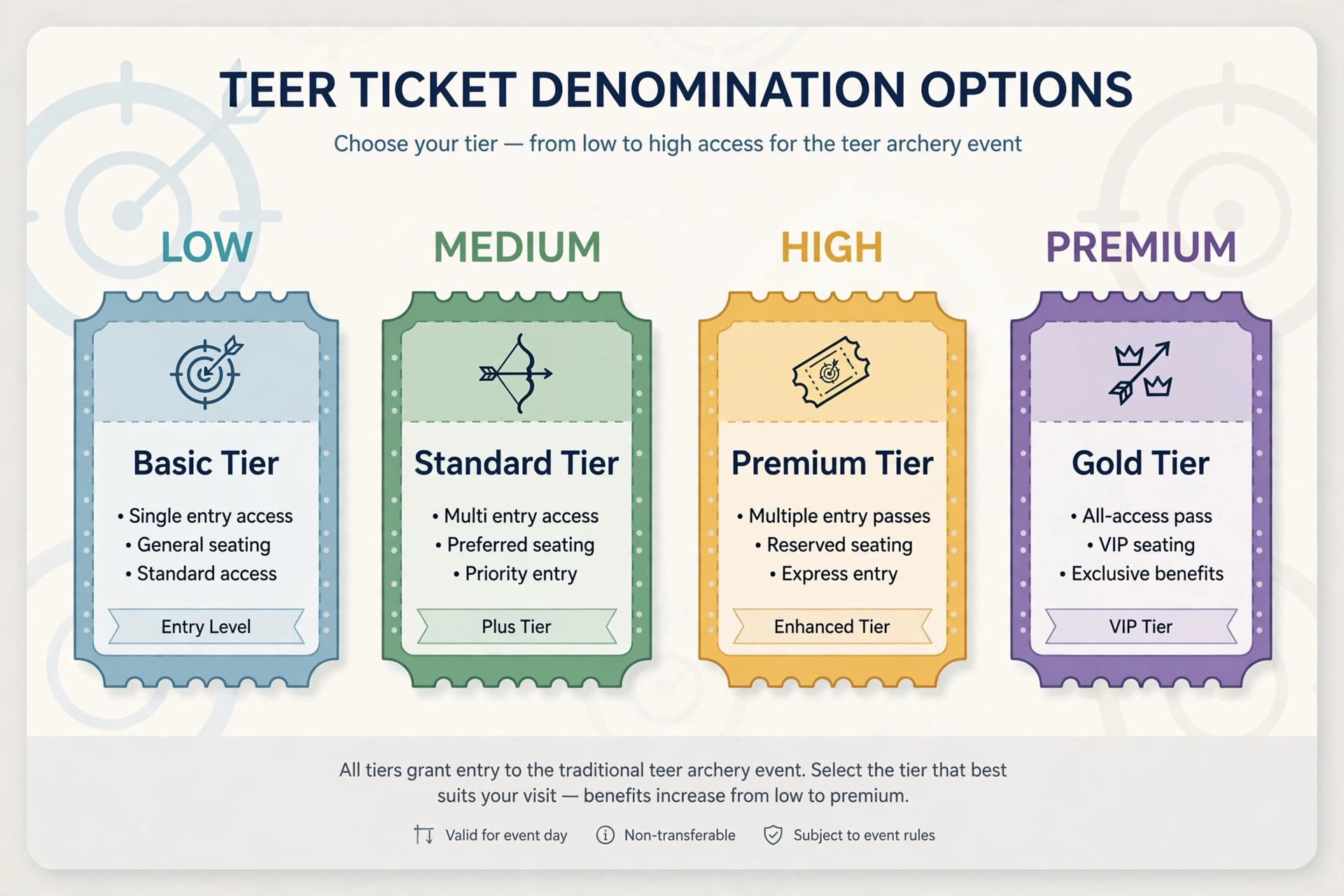
Teer Ticket Denominations You Will Find at Counters
Walk up to any licensed teer counter in Meghalaya and you will see a small set of fixed denominations. Understanding these options helps you decide how much you want to spend before you buy.
The Rs 10 Ticket
The Rs 10 ticket is the most common entry point and the one most first time players choose. It is the lowest widely available denomination, which makes it ideal if you simply want to experience the game or test your understanding of how the rounds work. Because the amount is small, many regular players buy several Rs 10 tickets with different number guesses rather than one large ticket.
Rs 20 and Rs 50 Tickets
The middle denominations suit players who want a slightly larger stake without spending too much. A Rs 20 ticket doubles your stake compared to the base ticket, while a Rs 50 ticket is popular among experienced players who follow the game daily. Counters always have these denominations in stock during sale hours, and they work exactly like the Rs 10 ticket in every other respect.
The Rs 100 Ticket
The Rs 100 ticket is the highest common denomination at most counters. It is chosen by players who want maximum prize exposure from a single ticket. Everything else about the ticket, including the rounds it covers and the way results are declared, is identical to the smaller denominations. Only the stake and the corresponding prize amount change.
A useful habit is to decide your total daily budget before you reach the counter and then split it across denominations if you wish. For example, a player with a Rs 100 budget might buy ten Rs 10 tickets with different guesses, or two Rs 50 tickets. The teer ticket price structure makes this kind of flexible budgeting easy.
How Teer Ticket Price Works Across FR and SR Rounds
Every teer session is played in two rounds, known as the first round (FR) and the second round (SR). This is where many newcomers get confused, so let us make it clear. The teer ticket price itself is the same for both rounds. What differs is how you choose to play them.
When you buy a ticket, you select a two digit number from 00 to 99 as your guess. You can buy a ticket for the first round only, for the second round only, or for both rounds. If you play both rounds on one ticket, you pay the denomination once and your chosen number applies to each round separately. Some players prefer to buy separate tickets for FR and SR with different number guesses, which means paying the denomination for each ticket.
Ticket sales for a round close shortly before that round begins, because the organisers need time to record all sales and prepare the archery session. This is why counters get busy in the final minutes before the first round. If you arrive after sales close, you cannot buy a ticket for that round and must wait for the next one. Planning your visit with a comfortable time margin is always wise.
After both rounds are complete, the results are declared as two digit numbers, one for FR and one for SR. You can check the declared numbers on the All Teer Results homepage, which updates every session with the latest first round and second round figures.
Where to Buy Teer Tickets – Licensed Teer Counters
Teer tickets are sold only at licensed physical counters. There is no official online sale, no mobile app run by the organisers, and no home delivery. Knowing where the counters are and how to recognise a licensed one protects you from fraud.
Shillong Teer Counters
Shillong has the largest network of teer counters, spread across neighbourhoods such as Polo, Laitumkhrah, Malki and the commercial areas near Police Bazar. Counters are usually small shops or kiosks with clear signage showing the teer name and the licence details. On working days the counters open in the morning and ticket sales continue until shortly before each round. If you want to follow the Shillong game specifically, the Shillong teer result page keeps the daily numbers in one place.
Juwai Teer Counters
Juwai, in the Jaintia Hills, runs its own teer game with its own counters and timings. The ticket denominations here are the same as in Shillong, and the buying process is identical. Visitors sometimes assume Juwai tickets are priced differently, but the regulated system keeps the teer ticket price uniform. Daily numbers for this market appear on the Juwai teer result page.
Khanapara Teer Counters
Khanapara sits near the Assam border and its teer game is popular with players from both states. Counters here follow the same price structure and the same licensed only rule. Because the area attracts many first time buyers, it is worth repeating the golden rule: buy only from a counter that displays its licence, and always take a printed ticket as proof of purchase. A verbal promise or a handwritten slip is not a valid ticket.
A printed ticket shows your chosen number, the round or rounds it covers, the denomination paid and a serial reference. Keep it safe until the results are declared, because you will need it to claim any prize.

Teer Khela Price – A Practical Breakdown for New Players
The phrase teer khela price is simply the local way of asking what the game costs to play, and the honest answer is that it costs as little or as much as you decide within the available denominations. Let us walk through a few realistic examples so the numbers feel concrete.
Suppose you are a beginner who wants to try one round. You walk to the counter, choose a number, and buy a single Rs 10 ticket for the first round. Your total spend is Rs 10. That is the entire cost of participation. If your number matches the declared first round result, you win a prize calculated as a multiple of your ticket value. If not, your total expense for the day is Rs 10.
Now suppose you follow the game more closely and want to play both rounds. You buy one Rs 20 ticket covering FR and SR with the same number. Your spend is Rs 20. Alternatively, you buy two Rs 10 tickets, one for FR with one number and one for SR with a different number. Your spend is still Rs 20, but you now have two different guesses in play.
A regular player with a fixed weekly budget might spend Rs 50 a day across five Rs 10 tickets, each with a different number. Over six playing days that totals Rs 300 for the week. Framing the teer khela price as a weekly entertainment budget, rather than thinking ticket by ticket, is the most responsible way to approach the game. Decide the budget first, then divide it into tickets, and never exceed it because of a previous loss.
Teer Ticket Price for Morning, Day and Night Sessions
Teer is played in multiple sessions each day, and newcomers often wonder whether the morning session costs more or less than the day or night session. The answer is simple: the teer ticket price is identical across every session. A Rs 10 ticket costs Rs 10 whether you buy it for the morning game, the afternoon game or the night game.
What differs between sessions is the timing of ticket sales and result declaration. Morning session counters open early and sales close before the morning rounds. The main day session, which most people simply call the teer result, has its own sale window closing before the afternoon rounds. Night sessions, where they operate, follow the same pattern in the evening.
This uniformity is convenient because you never need to memorise different prices for different times of day. If you play two sessions in one day, just remember that each session needs its own ticket. A ticket bought for the morning session cannot be used for the day session. For a full overview of every session and its declared numbers, the teer result list archive is a handy reference.

Can You Buy a Teer Ticket Online
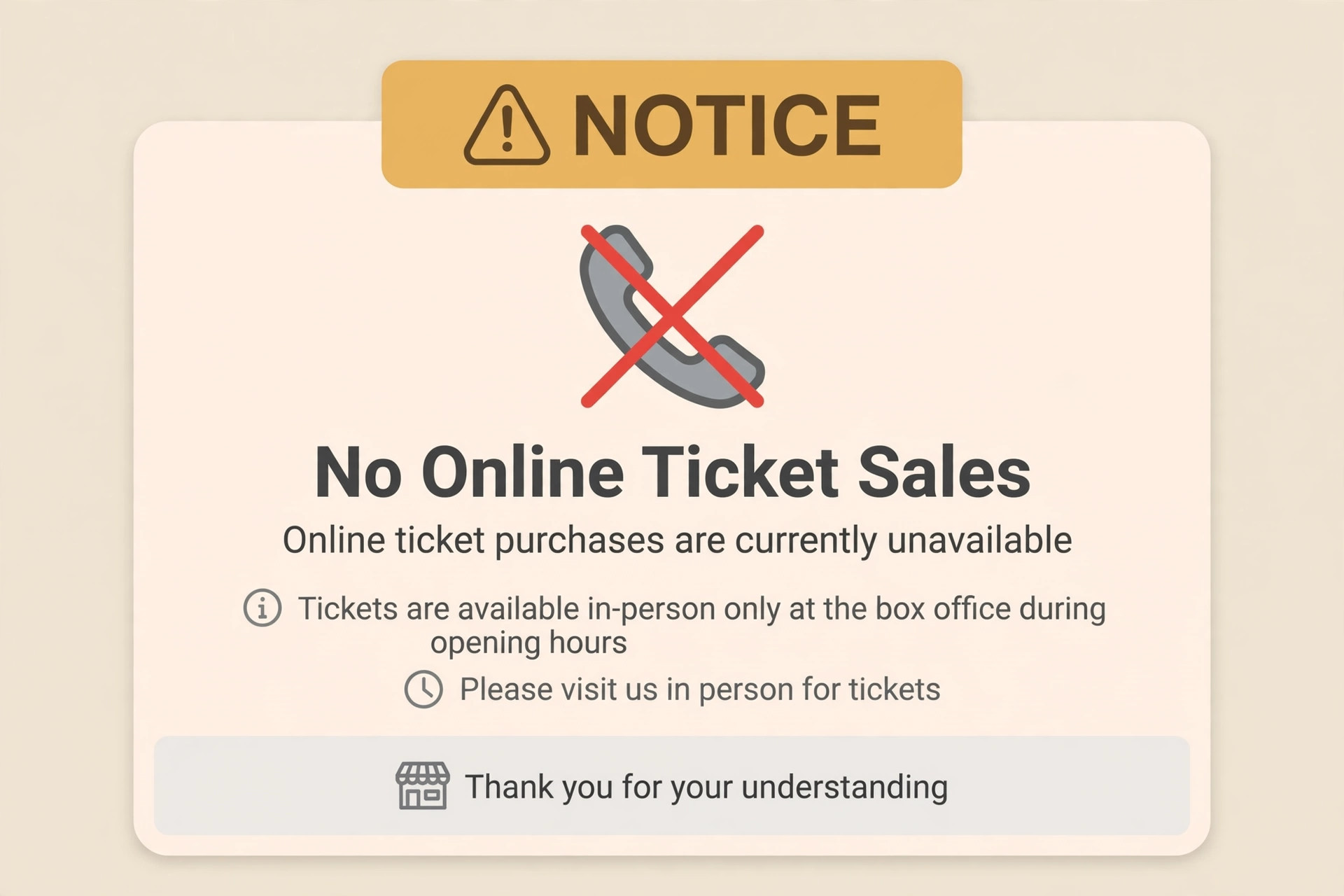
This question comes up constantly, because almost everything else can be bought online today. The clear answer is no. There is no legal or official way to buy a teer ticket online. Tickets are sold exclusively at licensed physical counters in Meghalaya, and any website or person offering to sell you teer tickets over the internet is running a scam.
These scams usually work in one of two ways. Some fraudulent websites take your payment for a so called online teer ticket and send you a fake confirmation that has no value. Others operate through messaging apps, asking you to transfer money for numbers that were never officially recorded. In both cases the victim loses money and has no valid ticket to claim with, even if their number is declared.
The organisers have never authorised online sales, and the state regulatory framework covers physical counter sales only. If you come across an advertisement promising online teer tickets, instant WhatsApp tickets or agent bookings from outside Meghalaya, treat it as fraud and do not send any money. Genuine participation requires a printed ticket from a licensed counter, purchased in person during sale hours.
For background on how the game is organised and regulated, you can read the lottery regulation in India on Wikipedia and check official state information through the Meghalaya government portal.
Understanding Prize Payouts Against the Teer Ticket Price
To understand what your ticket can return, you need to know how prizes relate to the teer ticket price. Teer prizes are paid as multiples of the ticket denomination, and the multiple is higher for the first round than for the second round. The exact multiples are set by the organising body and are displayed at licensed counters, so always confirm the current figures where you buy.
In general terms, a winning first round guess pays a larger multiple of the ticket value than a winning second round guess. This means a Rs 10 ticket that wins the first round returns more than a Rs 10 ticket that wins the second round, and a Rs 100 winning ticket returns ten times what a Rs 10 winning ticket returns for the same round. The relationship is proportional: double the denomination, double the prize for the same winning outcome.
It is important to understand that the prize depends entirely on matching the declared two digit number for the round your ticket covers. There are no partial prizes for close guesses and no consolation tiers. Your ticket either matches the declared result for its round or it does not. This all or nothing structure is why experienced players spread smaller tickets across several numbers instead of placing everything on a single guess.
Prize claims must be made with the original printed ticket within the claim period announced by the organisers. Counters and organising offices handle verification, and larger prizes may require identity documentation. Never hand your ticket to an unknown middleman who promises to claim on your behalf.
Smart and Responsible Teer Ticket Buying Tips
A few practical habits will keep your teer experience safe and enjoyable. First, fix a daily or weekly budget before you buy anything, and treat it as the cost of entertainment rather than an investment. The teer ticket price is low precisely so that participation stays casual. The moment you feel tempted to chase losses by buying more tickets, step away for the day.
Second, always buy early in the sale window rather than rushing in the last minutes. Counters get crowded before round closing time, mistakes happen under pressure, and you risk missing the cutoff entirely. An early purchase also gives you time to double check that the number printed on your ticket matches the number you chose.
Third, keep every ticket until results are declared and the claim window closes. Even a ticket that did not win the first round may still be live for the second round if you bought it for both. Store tickets somewhere safe and dry, because a damaged or lost ticket cannot be reprinted.
Fourth, play only with money you can afford to lose, and never borrow to buy tickets. Teer is a game of chance, and no number selection method can guarantee a win. Anyone who claims to sell guaranteed winning numbers is dishonest, whether they ask for the price of a ticket or a separate fee.
Finally, remember the legal boundaries. Teer is legal in Meghalaya for adults aged 18 and above. If you are visiting from another state, make sure you understand that the game is regulated locally and tickets are sold only within the authorised areas.
Teer Ticket Price – Frequently Asked Questions
What is the minimum teer ticket price?
The lowest widely available denomination is Rs 10 at licensed counters. This is the standard entry level ticket across Shillong, Juwai and Khanapara, and it works exactly like higher denominations except for the stake and prize amounts.
Does the teer ticket price change between the first and second round?
No. The price of a ticket depends only on its denomination, not on the round. A Rs 20 ticket costs Rs 20 whether it covers the first round, the second round, or both rounds together.
Are teer tickets cheaper in the morning session?
No. The teer ticket price is the same for morning, day and night sessions. Each session simply needs its own ticket, because a ticket bought for one session cannot be used in another.
Where can I buy a teer ticket?
Only at licensed physical counters in Meghalaya, in areas such as Shillong, Juwai and Khanapara. Look for clear signage and licence details at the counter, and always collect a printed ticket as proof of purchase.
Can I buy a teer ticket online or through WhatsApp?
No. There is no official online sale of teer tickets. Any website, app or person offering online teer tickets is running a scam. Genuine tickets must be bought in person at a licensed counter during sale hours.
What details should be printed on my teer ticket?
A valid ticket shows your chosen two digit number, the round or rounds it covers, the denomination you paid, and a serial reference. Check all of these before leaving the counter.
How do I claim a prize if my ticket wins?
Keep the original printed ticket safe and present it at the counter or organising office within the announced claim period. Larger prizes may need identity proof. Never give your ticket to an unknown agent.
Conclusion
The teer ticket price is one of the simplest parts of the game: small fixed denominations starting around Rs 10, identical at every licensed counter and across every session, with no hidden charges. The real things to get right are buying only from licensed counters, purchasing within sale hours, keeping your printed ticket safe, and setting a firm budget before you play. With those habits in place, checking the daily first round and second round numbers becomes a relaxed routine rather than a source of stress. For the latest declared numbers across all markets, keep the All Teer Results homepage bookmarked and play responsibly.