
Every afternoon, thousands of phones light up across Northeast India within minutes of each other. Someone in Shillong refreshes a page. Someone in Guwahati gets a message from a friend. Someone in Jowai hears the number called out at a tea stall. They are all chasing the same thing: teer result live updates, the fresh winning numbers of the day’s archery sessions. But have you ever wondered where those updates actually come from? A number does not simply appear on a screen. It begins as a physical event, dozens of archers loosing arrows at a target on a real field, and then it travels through a very human chain before it becomes the two digits you read online. This article follows that journey from start to finish, so the next time you check a live teer result today, you will know exactly whose hands it passed through.

What Teer Result Live Updates Actually Mean
The phrase gets used so often that it starts to sound like one word, but it helps to slow down and unpack it. “Teer” is the Hindi word for arrow, and the game is archery-based betting, legal and regulated in the state of Meghalaya. “Result” is the declared outcome of a round, always a two-digit number. “Live updates” are the fresh postings of that number as close to the moment of declaration as possible. Put together, teer result live updates are the near real time publication of each round’s winning number, first round and second round, for every market that plays on a given day.
There is an important distinction hidden inside that definition. A live update is not the same thing as the result itself. The result is decided on the ground when officials finish counting arrows. The update is the *reporting* of that decision. Between the two sits a gap of minutes, sometimes longer, filled with phone calls, messages, scoreboard photos, and website refreshes. Understanding that gap is the key to understanding why one site shows the number at 3:52 PM and another shows it at 4:05 PM, even though both are reporting the same round. Neither site invented the number. They simply received it through different routes at different speeds.
You will also notice that serious followers talk about a teer live update source the way news readers talk about a news wire. That is not an accident. Behind the pages there is a supply chain, and like any supply chain, some links are closer to the origin than others. The rest of this article walks you through every link.
The Ground Where Every Update Begins
Polo Ground, Shillong
Every story about shillong teer live coverage starts at the same patch of grass: the Polo Ground in Shillong, the capital of Meghalaya. This is the historic archery field where the most famous teer sessions are conducted. On playing days, the ground fills with archers, officials, and spectators. Rows of archers take their positions facing tall bamboo targets set at the far end of the field. When the round begins, they shoot in volleys, and hundreds of arrows arc through the air toward the targets. If you have never seen it, picture a cricket ground repurposed for an ancient sport, with the low thrum of bowstrings replacing the crack of a bat.
The Polo Ground matters to live updates for a simple reason: proximity. The people standing closest to that field hear the declared number first. Everything downstream, every website, every WhatsApp forward, every “live” page, is downstream of what happens on this grass. When a real time teer result page claims to be fast, what it really means is that its chain back to this ground is short.
The Archers and Their Arrows
The archers are the engine of the entire system, yet they rarely get mentioned in update culture. They are mostly local men from Khasi communities, for whom archery is not a hobby but a heritage skill passed down through generations. Teer grew out of this tradition. Long before there were websites, there were archery contests, and betting on the outcome is what turned a sport into a lottery that the state eventually chose to regulate rather than ban.
During a round, a large group of archers shoots a fixed number of arrows each at the target. The atmosphere is disciplined and quick. Officials watch closely because every arrow that sticks in the target will matter in the count that follows. The archers themselves do not decide anything about the number. They simply shoot. But without their skill, their rhythm, and their consistency, there would be no game and no updates to chase.
How the Winning Number Is Decided
Counting the Arrows That Hit
When the shooting stops, the most careful part of the day begins. Officials walk to the targets and count, arrow by arrow, how many struck the target area. This is slow, deliberate work, and it has to be, because the entire betting outcome hangs on a single total. Witnesses from the organizing association observe the count. Disputes are rare precisely because the process is so public: dozens of eyes, including spectators behind barriers, watch the counting happen.
This is the moment the result is born. Not when a website publishes it, not when a message arrives on your phone, but here, in the open air, with officials pointing at each embedded arrow and keeping a running tally.
Why Only the Last Two Digits Matter
Here is the detail that confuses every newcomer. Suppose the officials count 1,247 arrows hitting the target (example only, not a real result). The declared result is not 1247. It is 47, the last two digits of the total. If the count were 2,030 (example only, not a real result), the result would be 30. The game is always played on a two-digit outcome, from 00 to 99, and the counting total is simply reduced to its final two digits.
This convention is old and universal across teer markets, and it is what makes the game a numbers lottery rather than a pure archery contest. Nobody needs to predict the exact total. Everyone is effectively betting on which two digits the total will end with. When you see a teer live result displayed as a simple pair of digits, now you know the arithmetic hiding behind it: a four-figure count of real arrows, trimmed down to two figures by tradition.
From the Scoreboard to Your Screen
The Official Announcement at the Ground
Once the count is verified, the result is written up on the ground’s scoreboard and announced to the people present. Ticket sellers, players gathered near the field, and local agents hear it directly. In the older days, this announcement was the whole distribution system: you had to be there, or know someone who was. The number spread through the town by word of mouth, the way news travelled in every small city before mobile phones.
Even today, this on-the-ground announcement remains the single authoritative moment. Every teer live update source worth trusting traces its number back to this point. If a website ever shows a number that contradicts what was announced at the ground, the ground wins. Always.
The Relay Chain That Carries the Number
So how does the number get from a scoreboard in Shillong to a phone in another state within minutes? Through a relay chain that is part technology, part human network:
Step 1 – The ground announcement. Officials declare the number at the field. Agents and spectators note it down.
Step 2 – The first calls. Counter agents and local ticket sellers phone or message their networks. In teer towns, these networks are dense and fast; a single message can reach hundreds of people in a minute through forwarding.
Step 3 – The publishers. Website operators, social media page admins, and messaging-channel owners receive the number from their contacts near the ground and post it. The fastest publishers are the ones with a contact standing at the field itself.
Step 4 – The readers. You refresh the page, open the message, or hear it from a friend. The chain is complete.
Notice how human this is. There is no satellite feed, no automated sensor counting arrows and pushing data to the cloud. Teer result live streaming in the video sense barely exists for the actual counting; what travels is a short text number passed hand to hand. That is why “live” in this world means “minutes after declaration” rather than “the same second.” Anyone promising literal second-by-second streaming of the count is selling something the game does not produce.
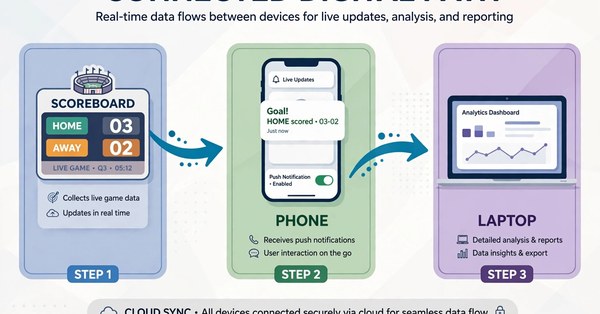
Teer Result Live Updates Across the Day’s Markets
One thing that surprises newcomers is how many separate games run in a single day. Teer is not one daily draw. It is a family of sessions held in different places at different times, each producing its own first round and second round numbers. A complete teer result live updates habit means following several of them.
Morning Sessions
The day opens with the morning markets. Juwai morning teer and Khanapara morning teer hold their rounds in the morning hours, with the first round typically declared mid-morning and the second round following later in the morning session window. Shillong also runs a morning session on many days. These markets have their own grounds, their own archers, and their own counting officials, which means each one is an independent teer live update source. A delay in Shillong does not affect Juwai, and a fast update from Khanapara tells you nothing about when Shillong will declare.
Afternoon Belongs to Shillong Teer
The main event, the one most people mean when they say “teer result,” is the afternoon Shillong session at Polo Ground. The first round is typically declared in the mid-afternoon, around 3:45 PM Indian time, and the second round follows later in the afternoon, around 4:45 PM. These are the numbers that draw the biggest crowds, the heaviest betting, and the most frantic refreshing. If you only follow one market, this is the one, and our Shillong Teer result page tracks it round by round.
Evening and Night Sessions
The day does not end with the afternoon. Khanapara’s day session declares in the evening, and then the night sessions take over. Shillong night teer runs late, with rounds typically declared around 11:10 PM and 12:10 AM, making it the last teer action of the day. Night markets have a devoted following of their own, and their updates flow through the same relay chain, just with smaller, later-night crowds doing the forwarding.
Because sessions are staggered, a dedicated follower can genuinely spend the whole day inside teer result live updates, moving from morning markets to the afternoon headline session to the night games. Our full teer result list keeps every market’s latest numbers in one place so you can follow the whole arc.
Reading a Live Teer Result Today Page Like a Local
Now that you know where updates come from, here is how to read them well. A good result page shows more than digits. Look for these elements:
- Market and session labels. “Shillong Teer, First Round” is meaningful. A bare number with no label is not.
- Round markers. FR and SR tell you which of the two daily rounds you are looking at. Confusing them is the most common beginner mistake.
- Timestamps or “updated” notes. These tell you how fresh the number is. A page that never shows when it updated is asking for blind trust.
- Awaiting states. Honest pages show a placeholder, often a dash, when a round has not been declared yet. Be suspicious of any page that always has a number instantly, even seconds after the round ends. Real counting takes real minutes.
- Date clarity. Teer runs nearly every day, and yesterday’s number is useless today. Always confirm the date on the page matches today.
Develop the habit of checking two independent pages before you treat a number as final. If both agree, you can be confident. If they disagree, wait. The ground truth will sort itself out within minutes, and patience is cheaper than acting on a wrong number.

The Legal Frame: A Regulated Game for Adults
Teer is not an underground gamble. It is a legal lottery in Meghalaya, conducted under the state’s amusement and betting tax legislation, with licensed organizers running the archery sessions. That legal status is part of why the results are public events rather than secrets: a regulated game declares its outcomes openly, at a real ground, in front of witnesses.
The legal frame comes with a boundary. Teer is strictly for adults aged 18 and above. If you follow teer result live updates, do it as an informed observer, set limits, and never chase losses. No update, however fast, changes the odds of the next round. Play responsibly, and treat the game as entertainment with a cost, not as income. For general background on the game itself, see Wikipedia’s article on Teer.
Frequently Asked Questions
Where do teer result live updates originally come from?
They come from the archery grounds where the game is played, most famously the Polo Ground in Shillong. Officials count the arrows that hit the target, take the last two digits of the total, and announce the number at the ground. Every website, message forward, and “live” page downstream is reporting that single on-the-ground declaration.
How fast are teer result live updates after the declaration?
Typically within minutes. The number must travel from the ground through agents, phone networks, and publishers before it appears online. Pages with a contact at the field post fastest. Expect a few minutes of lag as normal; instant numbers appearing seconds after shooting ends should be treated with suspicion, since counting itself takes time.
What is the difference between FR and SR in live teer results?
FR is the first round and SR is the second round of the day’s session. Each round is a separate archery event with its own count and its own two-digit result. In Shillong’s afternoon session, the first round is usually declared mid-afternoon and the second round later in the afternoon. Both rounds are independent; the SR number has no mathematical relationship to the FR number.
Why do different sites show teer live update times that differ by a few minutes?
Because each site sits at a different distance from the ground in the relay chain. A site whose publisher has a contact at the field updates faster than one relying on secondhand forwards. Small differences of a few minutes are normal and do not mean either site is wrong, as long as the numbers themselves agree.
Can I watch teer result live streaming of the actual archery?
There is no official second-by-second video stream of the counting process. “Live” in teer culture means fast text updates of the declared number, not live video of the ground. Be cautious of pages or channels claiming to stream the draw itself; the genuine product is the declared two-digit result, published within minutes.
Is teer legal, and who regulates it?
Yes. Teer is a legal lottery in the state of Meghalaya, conducted under the state’s amusement and betting tax laws by licensed archery associations. It is strictly for adults aged 18 and above. If you participate, do so responsibly and within your means.
What should I do when a result shows as “awaiting” or a dash?
Wait. An awaiting state means the round has not been declared yet, usually because counting is still underway or the session is running late. Do not fill the gap with numbers from unverified forwards. Check back in a few minutes, and cross-check with a second source before treating any number as final.
A Number With a Long Journey
The next time a teer result live updates page flashes the day’s digits at you, remember the journey behind them: archers at Polo Ground drawing their bows, officials counting arrows one by one in the open air, an announcer calling the number, and a chain of phone calls and messages carrying it to your screen in minutes. The technology is ordinary. The human network is extraordinary. And now you know exactly where your update comes from, which makes you a sharper reader than most. For the fastest consolidated view across every market, keep our homepage bookmarked and check the Juwai Teer result page alongside Shillong for the full day’s picture.