
If you have ever opened a teer result page and felt unsure about what the numbers mean, you are not alone. Learning how to read teer result listings is the first real skill every follower of this game picks up, and it is simpler than it looks. A teer result is always a two digit number, announced once for the first round and once for the second round of the day. This guide walks you through every part of a result card in plain words, so the next time you check a number on this site you will know exactly what you are looking at.

How to read teer result in 60 seconds
Here is the short version. Every teer market in Meghalaya holds two shooting rounds in a day. Archers shoot arrows at a straw target, officials count how many arrows hit, and the declared result is the last two digits of that count. If 812 arrows hit the target in the first round, the announced first round result is 12. The second round works the same way with its own count and its own two digit number. On a result card you will see the market name at the top, the date, then two numbers labeled FR (first round) and SR (second round). That is the whole system. Everything else on the page is there to help you confirm which market, which day and which round a number belongs to.
Once you understand that the result always comes from a real count of real arrows, the rest falls into place. You never need to guess what a number means. A result card is simply a record that says: on this date, in this market, this many arrows hit in round one and this many hit in round two, so these are the two official numbers.
What a teer result card actually shows
Result pages on this site follow the same pattern every day, which makes them easy to scan once you know the layout. Let us break the card into its parts.
The market name
At the top of every card you will see the name of the market, such as Shillong Teer, Juwai Teer or Khanapara Teer. The market tells you where the archery was held. Shillong Teer is shot at the Polo Ground in Shillong by archers from about a dozen clubs under the Khasi Hills Archery Sports Association. Juwai and Khanapara are separate markets with their own archers, their own targets and their own counts, so their numbers are always different. Never mix a number from one market into another. If you want the Shillong numbers, make sure the card actually says Shillong.
The date line
Right below the market name comes the date. This is the single most misread part of any result page. Always check that the date matches today before you treat the numbers as current. Result sites, including ours, also keep history tables with older dates, and it is easy to glance at yesterday’s numbers by mistake. A good habit is to read the date first and the numbers second. If the date line says a date that already passed, you are looking at history, not the latest declaration.
First round (FR) and second round (SR)
The two numbers on the card are labeled FR and SR. FR stands for first round and SR stands for second round. In Shillong, the first round of shooting happens in the afternoon and the second round follows later in the evening. Each round is a completely separate event with a fresh count, so FR and SR are independent numbers. A result of 47 in the first round says nothing about what the second round will be. Read them as two separate answers to two separate questions.
How to read teer result numbers step by step
Now let us put it all together into a simple routine you can follow every day.
Step 1 – Pick your market. Decide which market you are checking. Shillong Teer is the most followed, but Juwai and Khanapara have their own daily cards. Open the card that carries that market’s name.
Step 2 – Confirm the date. Read the date line on the card. If it is not today’s date, the numbers are from an earlier day. On the teer result list page you will find all markets for the current day in one place, which makes this check easy.
Step 3 – Read the FR number. Find the box labeled FR or First Round. That two digit number is the official result of the day’s first shooting round. Write it down or memorize it before moving on.
Step 4 – Read the SR number. Find the box labeled SR or Second Round. That is the official result of the second round. It is declared after the first round, so if the card still shows a dash or the word awaiting for SR, the second round simply has not been declared yet.
Step 5 – Know what a dash means. A dash or a blank box is not a missing number. It is the site’s way of saying the round has not happened or the count has not been announced yet. Never treat a dash as zero. Wait for the declared number instead.
Where the two digits actually come from
A lot of readers wonder why the result is always two digits, never three. The answer goes back to the Polo Ground and the way the game is scored. In the first round, about fifty archers each shoot thirty arrows, and in the second round each archer shoots twenty arrows. Officials then count only the arrows that actually struck the target. That count is usually a three or four digit number, something like 847 or 1231. The declared result is simply the last two digits of that count. So a count of 847 becomes 47, and a count of 1231 becomes 31.
This is why the result can be anything from 00 to 99. A result of 00 does not mean nobody hit the target. It means the count ended in two zeroes, for example 900 arrows hit. Every number from 00 to 99 is equally possible on paper, because it all depends on where the final count lands. The two digit format is just a compact way to publish the outcome of a long counting process.
The counting is done by officials at the ground, not by result websites. Sites like ours publish what the officials declare. That distinction matters: if two sites ever show different numbers for the same round, the tie breaker is always the official declaration at the venue, and the site that corrects itself fastest is the one doing its job properly.
Reading old results and history tables
Below the current day’s card you will often find a history table with the past thirty days of results. Reading a history row uses the same skills. Each row starts with a date, then shows the FR and SR numbers for that date and market. History tables are useful for getting a feel for how results move around, but remember what they are: a record of the past. Past numbers do not influence future rounds, because every round starts with a fresh set of arrows and a fresh count. Use history to understand the format, not to predict anything.
One more thing about history tables. Some sites show them with the newest date at the top and some with the oldest first. Either way, the date column is your anchor. Read the date, then read across the row for FR and SR. If you keep that habit, you will never confuse an old number with a new one.
Terms you will see next to results
A short glossary helps, because result pages use a few local terms that new readers may not know.
FR and SR. First round and second round, as explained above.
Guti. The local word for a two digit number in the 00 to 99 range. When someone says a guti, they mean one of the hundred possible results.
Declared. The round has been shot, the arrows have been counted and the official number is published. A declared number is final for that round.
Awaiting. The round has not been declared yet. The card will show a dash or the word awaiting until officials finish the count.
Market. The place and organizing body behind a set of results, such as Shillong, Juwai or Khanapara. Each market declares its own numbers.
Draw. Sometimes used to mean a round of shooting and its result together.
A quick checklist before you trust what you read
Speed matters with teer results, but accuracy matters more. Run through this short checklist whenever a new number appears.
- Does the card name the market you wanted? Shillong, Juwai and Khanapara numbers are never interchangeable.
- Is the date today’s date? If not, you are reading history.
- Are both rounds declared, or is one still awaiting? A dash means not yet, not zero.
- Does the number look like a proper two digit result, from 00 to 99? Anything else is a formatting error.
- If you are comparing across sites, does the number match the official declaration? The venue count always wins.
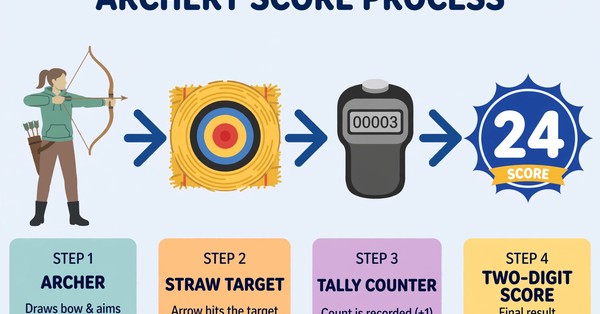
How results travel from the ground to your screen
It helps to know the short journey a number takes before it lands on a result card, because it explains why timings can shift by a few minutes from day to day. After the archers finish a round, officials at the venue count the arrows embedded in the target. This is a physical count done by hand, and it takes time when more than a thousand arrows have been shot. Once the count is confirmed, the venue announces the two digit result through its own channels, and licensed counters and result publishers update their boards and pages.
That chain is also why two honest sites can briefly disagree. One publisher may have refreshed its page a minute earlier than another. A short delay does not mean a wrong number, but if the difference lasts, something is off and you should trust the official venue declaration. On this site we publish numbers as soon as they are confirmed and we correct any error openly, because a result page is only as good as its honesty.
Reading results on a phone
Most readers check teer results on a mobile phone, and small screens are where misreads happen most. Zoom in on the card rather than guessing at small digits. Make sure you have scrolled to today’s card and not a history row that looks similar. If the page loaded while you were on a slow connection, pull to refresh once before trusting an awaiting box, because a stale page can show a dash for a round that was already declared. These small habits take seconds and they remove almost every common mistake.
A note on the game behind the numbers
Teer is a legal lottery in the state of Meghalaya, run under the Meghalaya Amusement and Betting Tax Act of 1982, and it is open only to adults aged 18 and above. The Government of Meghalaya portal is the official source for state administration and regulations covering games of this kind. The game grew out of the archery traditions of the Khasi people, for whom the bow and arrow have deep cultural roots. In Hindi the word teer means arrow, and locally the game is also known as Thoh Tim. Tickets are sold through licensed counters across the state, and the shooting itself is a public event you can watch at the Polo Ground. If you take part, play responsibly and treat it as entertainment with money you can afford to spend. Results pages like this one exist to keep followers informed quickly and honestly.
Frequently asked questions
What does a teer result number actually represent?
It represents the last two digits of the number of arrows that hit the target in one round of shooting. Officials count every arrow that struck the straw target, and the final two digits of that count become the declared result for the round. So the number is a compressed record of a real physical count, not a number drawn from a machine.
Why are there two numbers every day?
Because there are two shooting rounds every day. The first round happens in the afternoon and the second round in the evening, and each round has its own archers’ shooting session and its own count. FR is the result of the first session and SR is the result of the second. They are independent of each other.
What should I do if the SR box shows a dash?
Wait. A dash means the second round has not been declared yet. The shooting may still be going on or officials may still be counting. Check back after some time and the number will appear. Do not guess it and do not treat the dash as zero.
Can the result really be 00?
Yes. A result of 00 means the arrow count ended in two zeroes, for example 800 or 1100 arrows hit. It does not mean the round failed or that no arrows hit the target. All hundred numbers from 00 to 99 are possible results.
How do I know I am reading today’s result and not an old one?
Read the date line on the card before you read the numbers. If the date matches today, the numbers are current. If the card sits inside a history table with older dates, those are past results. The Shillong teer result page and the teer result list page always lead with the current day.
Do different markets ever declare the same number?
Sometimes, by pure chance. Shillong, Juwai and Khanapara each run their own shooting and counting, so their numbers are independent. If two markets happen to show the same two digits on the same day, that is coincidence, not a signal. Always check which market name sits above the number you are reading.
Is there a best time of day to check the result?
The first round result usually appears in the afternoon and the second round in the evening, after each round’s counting is done. If you check in the morning you will only see the previous day’s numbers or awaiting boxes, so wait until after the shooting sessions. A single evening check catches both rounds on most days.
Wrapping up
Reading a teer result comes down to five habits: pick the right market, check the date, read FR, read SR, and respect the dash when a round is still awaiting. The two digit numbers you see are the last two digits of a real arrow count carried out in front of spectators at grounds like the Polo Ground in Shillong. Keep this page bookmarked, and if you ever feel unsure, start again at step one. For the latest declared numbers across every market, head to the homepage and read the cards the way you just learned.
