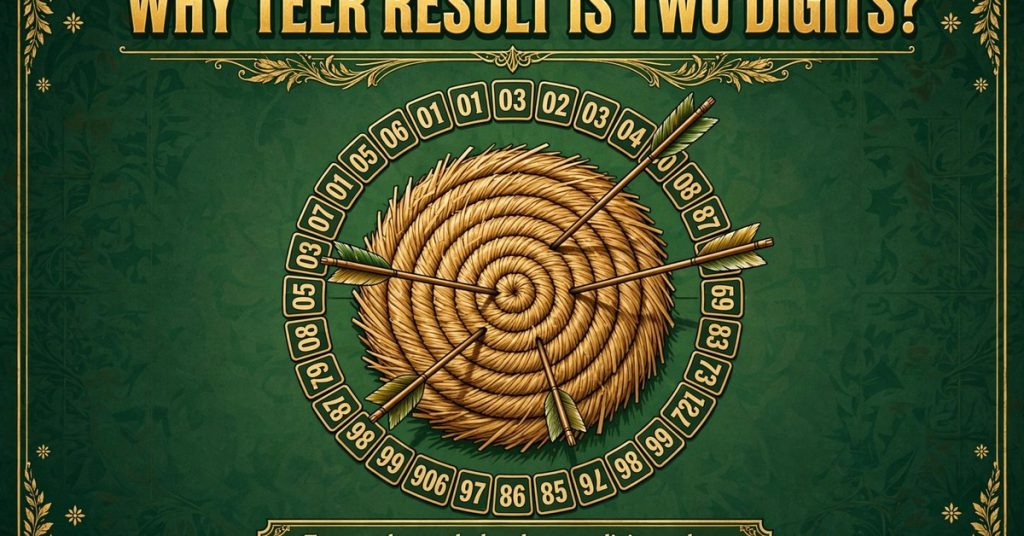
Look at any teer board in Shillong and you will see it. Two numbers. First round, second round. Always two digits, never one, never three. If you are new to the game, that little detail can feel strange, and you might be wondering why teer result is two digits instead of any other length. The answer is not a rule someone invented on a whim. It comes straight from how the game is played, how the arrows are counted, and how the tickets were designed a long time ago.
On this page, we walk you through the whole story in plain language. You will meet the archers, watch the shooting, sit in on the counting, and see the exact moment a pile of arrows turns into a two digit number. By the end, the format will feel obvious, and you will read any teer result board with total confidence.

Why Teer Result Is Two Digits – The Short Answer
Here is the fastest version. Fifty archers shoot arrows at a straw target. Officials count every arrow that hit the target. The final count can be a big number, sometimes well over a thousand. Only the last two digits of that count are declared as the result. So if the officials counted 847 arrows in the target, purely as an arithmetic example and not a real result, the declared result would be 47. That is the whole secret.
Why does the game work this way? Because it has always worked this way. Teer grew out of traditional archery contests in the Khasi Hills of Meghalaya, where the number of hits was the natural score. When the contest became an organized lottery, the organizers needed a fixed format for tickets and results. Taking the last two digits gave them a clean, repeatable number between 00 and 99, round after round, day after day.
Meet the 50 Archers Who Make the Number
Every teer round begins with people, not numbers. Fifty archers line up at the ground, bows in hand, facing a cylindrical straw target set at a fixed distance. These archers belong to registered clubs, and they shoot in public, in front of spectators and officials. Nothing about the shooting is hidden.
For the first round of the day, each of the fifty archers shoots thirty arrows. Multiply it out and you get a maximum of 1,500 arrows in the air per round. Not every arrow hits the target, of course. Some miss. Some glance off. Only the arrows that stay embedded in the straw count toward the total.
That total is where your two digit result comes from. Because the maximum count runs into four digits, the organizers take the last two digits and ignore the rest. Picture a count of 1,234, again only an example to show the math, and the declared result becomes 34. A count of 512 becomes 12. Simple. Fast. The same every time.
Thirty Arrows Each in the First Round
The first round is the long round. With fifty archers each shooting thirty arrows, the sky above the Polo Ground in Shillong fills with arrows for a solid stretch of shooting. The standard declaration time for this round in the main Shillong session is around 3:45 PM India time, and crowds gather well before that to watch.
Thirty arrows per archer is a lot of shooting. It takes stamina and concentration, and the archers have been doing this for years. By the time the last arrow lands, the target looks like a porcupine, and the officials move in to start the most important job of the day: the count.
Twenty Arrows Each in the Second Round
The second round is shorter. Each archer shoots twenty arrows, which means a maximum of 1,000 arrows per round. The declaration usually follows about an hour after the first round, around 4:45 PM India time in the main Shillong session.
Even though fewer arrows fly in the second round, the result format is identical. Officials count the hits, take the last two digits, and announce the number. The two rounds are completely separate events, each with its own shooting, its own count, and its own two digit result.
The Moment Shooting Stops and Counting Starts
This is the part most newcomers never picture. When the shooting ends, everything goes quiet. Officials walk up to the straw target and begin pulling out or marking each arrow, counting one by one. Spectators watch. Nobody talks much. The count is serious business because the number it produces decides thousands of tickets.
What the Officials Actually Count
Only arrows stuck in the target count. Arrows that fell short, sailed wide, or dropped to the ground are not part of the total. The officials go around the cylindrical target methodically, tallying each embedded arrow on a sheet. Sometimes they pull the arrows out as they count so none gets counted twice.
You might wonder why the game counts hits instead of measuring accuracy. The answer goes back to the roots of the sport. In the traditional archery contests of the Khasi people, the sheer volume of hits was the spectacle. Teer kept that spirit. The Wikipedia article on Teer describes how the game blends this archery tradition with a lottery format, which is exactly why the result is a count rather than a score.
The Last Two Digits Rule
Once the total is known, the rule kicks in. The officials look at the final tally and keep only its last two digits. Everything to the left is discarded. Say the tally reaches 1,089, purely to illustrate the rule, and 89 is what gets declared. A tally of 640 trims down to 40. And when the tally itself is 99, the number simply stays 99.
Why discard the rest? Because the ticket system was built around exactly one hundred numbers, from 00 to 99. Keeping the full count would produce results in the hundreds or thousands, and no ticket grid was ever printed for those. The last-two-digits rule is the bridge between the physical reality of a thousand-plus arrows and the neat one-hundred-number world of the tickets. It is the reason why teer result is two digits, every round, without exception.

Why Teer Result Is Two Digits and Never Three
You might ask a fair question at this point. If the count is sometimes 1,234, why not declare 234? Or why not declare the full 1,234? The answer is practical, and it has two parts.
A Hundred Tickets, a Hundred Possibilities
Teer tickets are sold on a fixed grid of one hundred numbers. Walk up to any licensed counter and you will see the grid: 00, 01, 02, all the way to 99. Each ticket names one of these numbers. That is the entire universe of choices a player gets.
A three digit result would need a thousand-number grid. Tickets would be harder to print, counters would be harder to run, and players would face far longer odds on every number. The two digit format keeps the game simple for everyone involved. You pick a number from 00 to 99, the archers shoot, the count is trimmed to two digits, and you compare. That simplicity is a big part of why the game has survived and grown for decades.
The Simplicity Behind the Format
There is also a quiet elegance to the rule. No complicated math. No points system. No judges scoring form. Just a count, trimmed at the end. Anyone standing at the ground can follow it. Anyone reading a result board can verify the logic.
This simplicity matters for trust. When a result is declared as a number between 00 and 99, any player can understand exactly how it was produced. The format does not hide anything. You can learn more about the markets and timings on our teer result list page, which covers every session in one place.
Why the Format Has Never Changed
Plenty of lotteries tweak their formats over the years. New ball machines, new draw styles, new ticket designs. Teer never did. The two digit format you see today is essentially the format players saw decades ago, and there are good reasons it stuck.
First, everyone already understands it. Counter staff, players, officials, even first-time visitors can grasp the idea in a single sentence: count the hits, keep the last two digits. Changing it would force the entire ecosystem to relearn the game for no clear benefit.
Second, the physical game did not change. Archers still shoot at straw targets. Counts still run into the hundreds or thousands. As long as the shooting works this way, the last-two-digits rule remains the most natural way to turn a big count into a playable number.
Third, continuity builds confidence. When you check a result board and see the same 00 to 99 format your predecessors saw, the game feels stable and honest. That stability is worth more to the organizers than any novelty a format change could bring. It is also why every result archive, every old chart, and every ticket from years past still reads exactly like today’s boards.
Reading a Two Digit Result on the Board
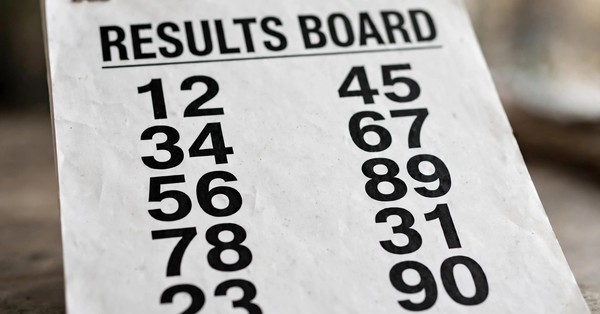
Once you understand the format, reading a board becomes second nature. Each session shows two results, one for the first round and one for the second round. Each result is a number from 00 to 99, written as two digits. If you want to follow a specific market, the Shillong teer result page shows both rounds side by side.
Why Both Rounds Share the Same Format
You might expect the two rounds to differ, since the first uses thirty arrows per archer and the second uses twenty. They do not. Both rounds end with a count, both counts get trimmed to their last two digits, and both results live in the same 00 to 99 grid. Keeping one format for both rounds was a practical choice. Counters print one grid. Players learn one system. Boards display two numbers that always look the same.
This sameness also helps when you compare rounds. A first round result of 47 and a second round result of 47 mean exactly the same thing: the arrow count in that round ended with the digits 47. No conversion. No special cases. Your ticket for either round works the same way.
What a Result Like 00 Means
Newcomers sometimes get confused by 00. Is it zero? Is it a hundred? Neither, really. It is simply what you get when the last two digits of the arrow count are both zero. A count of 700, as an example of the rule only, becomes 00. A count of 1,300 becomes 00. It sits in the grid right alongside 01 and 99, a full member of the one-hundred-number family.
The same logic applies to results like 05 or 09. These are written with a leading zero so that every result is visibly two digits long. The leading zero is part of the format, not decoration. It keeps the board consistent and makes sure nobody mistakes 05 for a one digit result.
Why Teer Result Is Two Digits on Every Market Board
Teer is not played in just one place. Shillong hosts the most famous sessions, but Juwai and Khanapara run their own rounds with their own archers and their own counts. If you follow the Juwai teer result or the Khanapara teer result pages, you will notice something reassuring: the format never changes.
Every market uses the same two digit rule. Fifty archers, a count of hits, last two digits declared. The timings differ, the grounds differ, and the crowds differ, but the number format is identical across all of them. That consistency is deliberate. It means a player who understands the format in Shillong can read a board anywhere teer is played.
Teer Number Format – Frequently Asked Questions
Why is the teer result always two digits?
The result is always two digits because it is formed from the last two digits of the total arrow count, and the ticket grid only covers numbers from 00 to 99. Both sides of the game, the shooting and the ticketing, were built around that one hundred number range.
How is the teer number formed after each round?
Officials count every arrow embedded in the straw target after the shooting ends. They take the total count and keep only its last two digits. That two digit number is announced as the result for the round.
What happens if the arrow count is less than 100?
Then the result is the count itself, written as two digits. A count of 47 is declared as 47. A count of 8 is declared as 08, with a leading zero to keep the two digit format.
Why do boards show results like 05 instead of 5?
The leading zero keeps every result exactly two digits long. It avoids confusion and keeps the board uniform. A result of 05 is a normal two digit result, just like 55 or 95.
Do all teer markets use the same two digit format?
Yes. Shillong, Juwai, and Khanapara sessions all use the same rule: count the hits, take the last two digits. The format is identical even though the archers, grounds, and timings differ.
Is the two digit format part of the official rules?
The format follows from how the game is organized and licensed in Meghalaya. Teer operates as a legal lottery under the state, and the 00 to 99 ticket grid with last-two-digits results is the standard every licensed counter follows. You can read about the state’s official framework on meghalaya.gov.in.
Can a teer result ever be a single digit?
No. Every official result is written as two digits, from 00 to 99. Even a count that ends in a single digit gets a leading zero, so 7 becomes 07 on the board.
Play Responsibly
Teer is a legal lottery in the state of Meghalaya, and participation is strictly for adults aged 18 years and above. The two digit format makes the game easy to understand, but easy to understand does not mean easy to win. Treat it as entertainment, set a firm budget before you play, and never chase losses. If you ever feel the game is taking more than it gives, step away.
The Bottom Line
So why teer result is two digits comes down to three simple facts. Archers shoot arrows, officials count the hits, and only the last two digits of that count become the result. The ticket grid covers 00 to 99, the boards show 00 to 99, and every market follows the same rule. Next time you glance at a teer result, you will know exactly what those two digits represent: the tail end of a thousand-arrow story, told by fifty archers on a Meghalaya afternoon.