If you have ever stared at a teer result page and felt like everyone else was speaking a secret language, this guide is for you. Getting your teer terms explained in plain English is the fastest way to go from confused newcomer to someone who can read a result board, follow a conversation at a ticket counter, and understand what each daily announcement actually means. Teer is an archery-based lottery played legally in Meghalaya, and like any game with deep local roots, it has built up its own vocabulary over the decades. Words like FR, SR, house, ending, and direct get thrown around constantly, yet almost nobody stops to define them for beginners.
This teer glossary walks through the most common teer terms one by one, grouped by theme so you can find what you need quickly. Everything here is informational. There are no number predictions, no tips, and no betting advice, just clear definitions you can trust. Once you finish, try reading the latest numbers on the All Teer Results homepage and notice how much more sense every line makes.
Teer Terms Explained – Why the Game Speaks Its Own Language
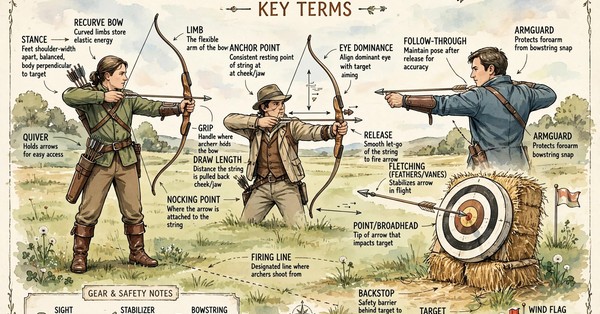
Every lottery develops slang, but teer vocabulary is special because it grew out of a real sport. Long before it became a numbers game, teer was simply archery, practiced for generations by the Khasi people of Meghalaya. The word “teer” itself is a Hindi/Urdu word meaning “arrow,” which tells you how central the bow is to this tradition. When archery contests started being used as the basis for a legal lottery, the sporting words came along with the numbers.
That is why a teer glossary mixes two worlds. You will find sporting terms (archers, rounds, the target) sitting next to lottery terms (tickets, forecasts, prizes). A newcomer who only knows the lottery half will be puzzled by talk of “rounds,” while someone who only knows archery will wonder why everyone cares about two-digit numbers. Understanding both halves is the whole point of getting your teer terms explained properly.
The second reason for the special vocabulary is regional. Teer is played in several towns, and each center has its own schedule and rhythm. Shillong, Juwai, and Khanapara are the three best-known centers, and regulars often shorten everything: “Did you see Shillong FR?” is a complete sentence to them. This guide uses full forms first, then introduces the shortcuts, so you learn the language the way locals actually speak it.
A third factor is print. Teer results have been published in local newspapers for years, and newspaper columns love abbreviations. FR for first round, SR for second round, and similar short forms saved precious column space. Those abbreviations stuck, and today they are used online exactly as they were used in print.
How this glossary is organized
Rather than listing words from A to Z with one-line definitions, this guide groups teer terminology into families: the rounds, the numbers, the people and places, and the money words. Each entry explains what the word means, where you will encounter it, and how it connects to the rest of the game. By the end, the individual definitions will click together into a complete picture of how teer works.
Teer Terms Explained – The Rounds That Define the Game
The single most important idea in teer terminology is the round. Every playing day is divided into shooting rounds, and each round produces its own result number. Almost every other teer term only makes sense once you understand this structure, so we start here.
FR – First Round meaning
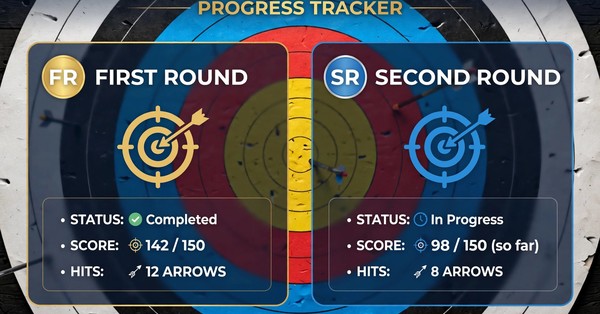
FR stands for First Round, and it is the opening shooting session of the day. At the Shillong center, which is organized by the Khasi Hills Archery Sports Association, fifty archers take part in the first round. Each archer shoots thirty arrows at the target, and officials count how many arrows actually strike it. The result number is derived from that count, which we will explain in the numbers section below.
When you see “Shillong Teer FR” on a result page, it means the number announced for the first round at Shillong. The first round at Shillong is traditionally held in the afternoon, with the number declared at 3:45 PM Indian time. People also say “FR result” or just “FR.” If someone asks “What came in FR?” they are asking for the first-round winning number.
SR – Second Round meaning
SR stands for Second Round, the second and final shooting session of the day. The same group of archers returns for another round of shooting, this time with fewer arrows per archer. At Shillong, each archer shoots twenty arrows in the second round. The counting method is the same, and a second, separate result number is announced. The Shillong second round number is traditionally declared at 4:45 PM Indian time.
The two rounds are completely independent. A number that appears in FR has no connection to what appears in SR. Beginners sometimes assume the second round is a continuation or a correction of the first, but it is not. Think of it as two separate contests held on the same day at the same ground.
Morning and evening sessions
Some centers run more than one full session per day. Shillong, for example, has a morning session in addition to the main afternoon session, and the same FR/SR structure repeats: a morning FR and a morning SR, announced around 10:30 AM and 11:30 AM. Night teer is another separate session held late in the evening, with its own first and second round numbers.
When you hear “morning teer” or “night teer,” the speaker is referring to these extra sessions, not to different games. Each session follows the same rules and the same terminology. Result pages usually list sessions separately so there is no confusion about which FR belongs to which part of the day.
Why there is no teer on Sundays
One term you will see often is simply “Sunday off” or “no game on Sunday.” Teer is not held on Sundays at the main centers, a long-standing weekly break for the archers and organizers. Result pages show a dash or a “holiday” note for Sundays. This is worth knowing because beginners sometimes worry that a missing result means a website error. It does not. Sunday is simply a rest day across Shillong, Juwai, and Khanapara.
Reading the Board – Numbers, Digits, and Result Words
Once the shooting is done and the arrows are counted, the outcome is expressed as a two-digit number from 00 to 99. The words in this section describe how that number is built, written, and talked about.
Result number
The result number is the official two-digit outcome of a round. Here is how it is produced: officials count every arrow that hit the target during the round, take the total, and keep only its last two digits. If 1,437 arrows struck the target, the last two digits are 37, so the result number is 37. If the total were 2,050, the result number would be 50. This counting method is the same everywhere teer is played, which is why the vocabulary is shared across towns.
Result numbers are always written as two digits, so a result of seven is written as 07, never as 7. This matters when you read result lists or old charts, because “07” and “7” are the same outcome but only the two-digit form is standard.
Direct number
A direct number is simply the full two-digit result written as one number, such as 37 or 82. The word “direct” distinguishes it from partial ways of talking about numbers, like house and ending, which we cover next. You will hear “direct” mostly in conversations: “Was 45 the direct?” means “Was 45 the exact two-digit result?” On result pages, the direct number is the headline figure for each round.
House
In teer terminology, the “house” is the first digit of the two-digit result number. If the result is 37, the house is 3. If the result is 82, the house is 8. The word comes from the idea that the first digit is the “house” or family the number belongs to. There are ten houses in total, numbered 0 through 9, and every result from 00 to 99 belongs to exactly one of them.
You will encounter “house” constantly in teer discussions. People say things like “house 3 came twice this week.” This is descriptive language about past results, and this guide defines the word only so you can follow such conversations. It is not a suggestion about what to play, and nothing in this article predicts future numbers.
Ending
The “ending” is the second digit of the result number, the mirror image of the house. If the result is 37, the ending is 7. If the result is 82, the ending is 2. Just as there are ten houses, there are ten endings, 0 through 9. Together, house plus ending make the complete direct number.
Beginners sometimes mix up house and ending, so here is a memory aid: the house is the digit you say first when reading the number aloud. Thirty-seven starts with “three,” so 3 is the house and 7 is the ending. Once that clicks, result discussions become much easier to follow.
Hit and miss
“Hit” is archery language that crossed into everyday teer talk. On the ground, a hit is an arrow that strikes the target. In conversation, people also use “hit” to mean a number that matched the result: “My number hit in SR” means their chosen number was the second-round result. “Miss” is the opposite: an arrow that failed to strike, or a number that did not match. Context tells you which meaning is intended, but both come from the same sporting root.
The People and Places Behind Teer Terminology
Teer is a community activity as much as a lottery, and many of its words name the people who make it happen or the places where it happens.
Archers
The archers are the heart of teer. They are skilled bowmen, many from traditional archery clubs, who shoot in the daily rounds. Fifty archers participate in each round at the major centers. Their accuracy determines the result, which is why teer is often described as a game of skill wrapped in a lottery format. When result pages mention the number of arrows shot, they are describing what these archers did that day.
The association and the clubs
Each teer center is organized by a licensed archery association. The best known is the Khasi Hills Archery Sports Association, which conducts the Shillong Teer at the Polo Ground in Shillong. The associations set the schedule, supervise the shooting, count the arrows, and declare the results. Beneath them are member archery clubs whose archers take part in the rounds. When you read that results are “declared by the association,” it means the official count has been certified and announced.
Polo Ground, Shillong
Polo Ground in Shillong is the most famous teer venue in the world, and the name appears constantly in teer terminology. It is the historic ground where the Shillong Teer rounds are shot each playing day. For readers outside Meghalaya, knowing this place name helps: when someone says “the Polo Ground result,” they mean the Shillong Teer result. Juwai and Khanapara have their own grounds, but Polo Ground is the landmark most associated with the game.
Counters and bookmakers
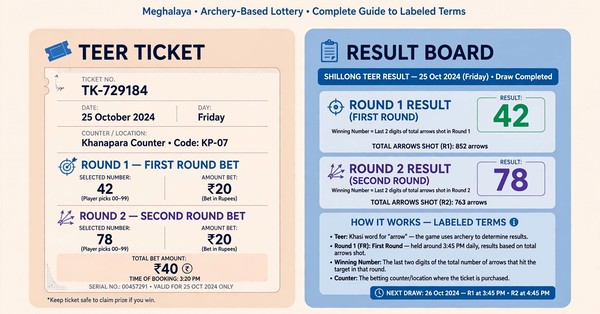
A “counter” is where tickets are sold. In Meghalaya, licensed teer counters operate in towns across the state, and each counter is run by an authorized seller. The word “bookmaker” is sometimes used for the same role, though in teer it simply means the licensed ticket seller, not anything shady. You buy your ticket at a counter, the seller records your chosen numbers, and you keep the ticket as proof. All prize claims go back through the counter system.
Tickets, Prizes, and Money Words
This family of terms covers what happens before the shooting (buying a ticket) and after the result (prizes). These words matter because they describe your rights as a player.
Ticket
A teer ticket is the small printed slip you receive when you place your stake at a counter. It shows the numbers you selected, the round or rounds they apply to, the amount staked, and the date. The ticket is your only proof of participation, so regular players guard it carefully. Lost tickets generally cannot be honored, which is why every guide to teer repeats the same advice: keep your ticket safe until results are declared and any prize is claimed.
Stake
Your “stake” is the amount of money you pay for your chosen numbers. Teer stakes are famously small; tickets are sold in modest denominations, commonly starting around ten rupees, which is part of why the game is so widely played. The stake is printed on the ticket. Winnings are calculated as a multiple of the stake, so a larger stake means a larger prize for the same correct forecast, but it never changes your odds.
Forecast
To “forecast” in teer means to select the numbers you think will be the result. Players forecast the direct number for a round, and sometimes they talk about forecasting the house or ending separately. The word is a polite lottery term for what is essentially a guess. It appears on older printed materials and in formal descriptions of the game: “forecast the two-digit number” simply means “pick your number.”
Prize and prize claim
The “prize” is the money paid to holders of winning tickets. Payouts are fixed multiples of the stake, and the exact rates are set by the organizers and printed at counters. A “prize claim” is the process of collecting your winnings: you present the winning ticket at the counter within the allowed claim period. Terms like “claim period” and “unclaimed prize” refer to the deadline for collecting and what happens if nobody comes forward. If you ever win, read the claim rules printed on your ticket and act promptly.
Common number, in plain words
You will sometimes hear the phrase “common number” in teer discussions. In plain language, it means a number that many people happen to be talking about or choosing on a given day. It is a social phenomenon, not an official term, and no authority publishes “common numbers.” This guide mentions it only so you recognize the phrase. Treat it as chatter, not information.
Everyday Teer Words You Will Hear at the Counter
Beyond the formal terms, teer has a layer of casual words used in daily conversation. “Counter closed” means ticket sales for the round have ended. “Result out” or “result declared” means the official number has been announced. “List” usually means the day’s result list or a chart of past results, such as the archive you can browse in our teer result list. “Chart” means the same thing: a table of previous results organized by date.
“Morning” and “evening” as prefixes simply tell you which session is meant. And “today” versus “yesterday” in phrases like “Shillong FR today” is how people specify the date without quoting it. If you can follow these small words, you can follow almost any teer conversation.
For readers who want to see the vocabulary in action on live pages, the Juwai teer result page shows FR and SR numbers in exactly the format described above, and the Shillong teer result page does the same for the Polo Ground rounds.
Teer Terms Explained – Frequently Asked Questions
What is teer FR meaning in simple words?
FR means First Round. It is the first archery shooting session of the day at a teer center, and its result is announced as a two-digit number. At Shillong, the first round traditionally takes place in the afternoon with the number declared at 3:45 PM Indian time. Every FR is independent: it has no effect on the second round later the same day.
What is teer SR meaning in simple words?
SR means Second Round. It is the second shooting session of the day, held after the first round with the same archers shooting fewer arrows. Its result is a separate two-digit number. At Shillong, the SR number is traditionally declared at 4:45 PM Indian time. FR and SR are two distinct results, not two parts of one result.
What do house and ending mean in teer?
House is the first digit of the two-digit result and ending is the second digit. In the result 37, the house is 3 and the ending is 7. These are descriptive words used when people discuss past results. They describe how a number is built; they do not predict anything.
Is teer legal?
Yes. Teer is a legal, state-regulated lottery in Meghalaya, organized by licensed archery associations under state government regulation. It is strictly for adults aged 18 and above. If you take part, play responsibly and only through licensed counters.
Why is there no teer result on Sundays?
Sunday is the weekly rest day for teer at the main centers, including Shillong, Juwai, and Khanapara. No rounds are shot and no results are declared. Result pages mark the day as a holiday. A missing Sunday result is normal, not an error.
What is the difference between a direct number and a house?
A direct number is the complete two-digit result, such as 45. The house is only its first digit, in this case 4. “Direct” refers to the whole number exactly as announced; “house” refers to one of its two digits. Both words describe the same result from different angles.
Where can I learn more about Meghalaya, the home of teer?
The state of Meghalaya, where teer originated and is legally played, is described in detail on Wikipedia’s Meghalaya page. For official state information, you can visit the Government of Meghalaya portal.
A Final Word
Learning teer vocabulary is a small effort with a big payoff. Once FR, SR, house, ending, and the rest of this teer glossary feel natural, every result page becomes easy to read and every teer conversation easy to follow. Keep this page bookmarked the next time a new term pops up, and remember the ground rules that keep the game healthy: teer is a legal lottery in Meghalaya for adults 18 and over, tickets are bought only at licensed counters, and the only numbers that matter are the ones officially declared. Play responsibly, and enjoy understanding the game as much as watching it.