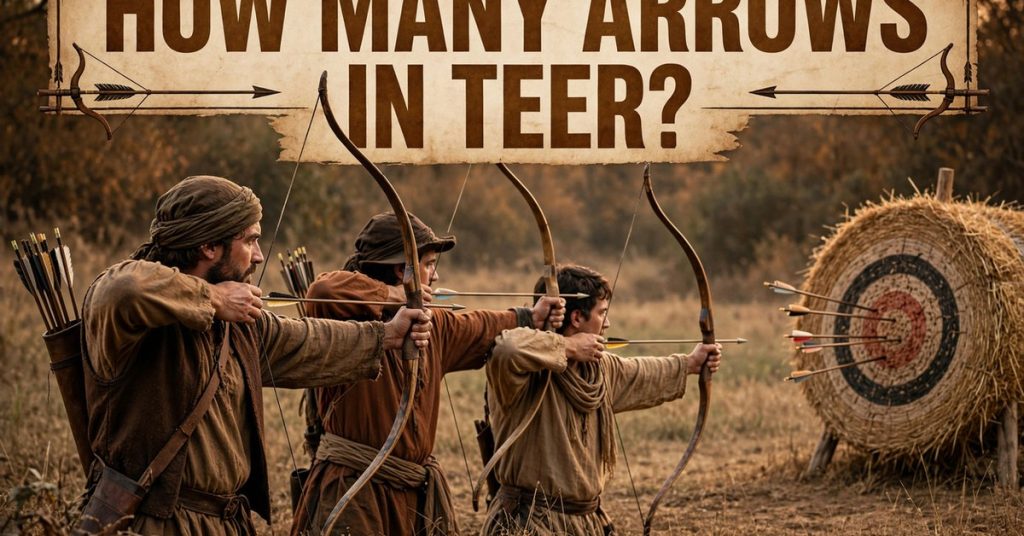
If you have ever watched teer arrow shooting and wondered how many arrows in teer actually leave the bows during a day’s play, you are asking the question that sits at the very heart of the game. Every two-digit result you see on a result board begins as a storm of arrows in the air, and the numbers behind that storm follow a format that has stayed remarkably steady for decades. This guide walks you through the archer lineup, the two rounds, and the counting that turns flying arrows into official results.
What “How Many Arrows in Teer” Really Means
The phrase sounds simple, but it covers three different numbers that are easy to mix up. First, there is the number of arrows shot, which is the total every archer releases during a round. Second, there is the number of arrows that hit the target, which is always lower because no archer lands every shot. Third, there is the final two-digit result, which is just the last two digits of the hit count. When people ask how many arrows in teer, they usually want the first number, the total shot, because that is the fixed, knowable part of the format.
Here is the short version before we go deeper. A standard teer session fields 50 archers. In the first round, each archer shoots 30 arrows, which puts a maximum of 1,500 arrows in the air. In the second round, each archer shoots 20 arrows, for a maximum of 1,000. Those are the commonly reported figures from the Polo Ground in Shillong, confirmed by multiple journalistic accounts over the years, including reporting by Scroll.in and LiveMint. The hit count, the number that matters for results, is counted by hand after each round and is always some smaller fraction of those maximums.
The Standard Setup – 50 Teer Archers on the Ground
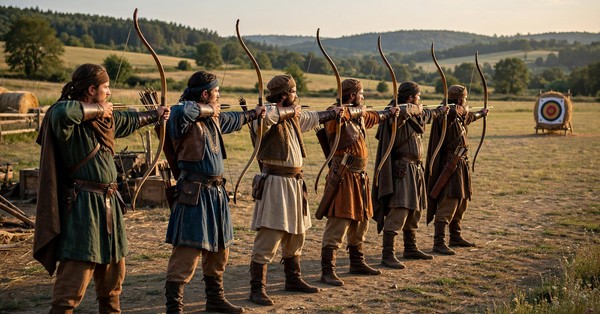
Every teer ground archers lineup starts with the same headcount. Fifty archers take their positions in a row or arc facing the target. This number is not a coincidence. The Khasi Hills Archery Sports Association, the body that regulates the game in Shillong, works with 12 affiliated archery clubs. On a normal day, two clubs are chosen to contribute 10 archers each, and the association itself supplies 30 archers, which adds up to the familiar 50. On the seventh day of the cycle, the format opens up and all 12 clubs contribute archers together.
Each archer must belong to a club affiliated with the association, and arrows are often differentiated by colour so officials can keep track of whose shafts are whose if that ever becomes necessary. The archers are mostly skilled marksmen from Shillong and its outskirts, and many of them have been shooting since childhood. Teer is, after all, the Khasi word for arrow, and archery has been part of Khasi tradition long before the betting game existed. For the archers, a day at the ground is a day of work, and reports have put their daily earnings at roughly Rs 250 to 300.
The lineup itself is a sight. Archers shoot from a squatting position using simple wooden bows, and they release arrows in rapid succession. Spectators gather behind barriers, tea sellers do brisk business, and the whole ground hums with the particular energy of a crowd waiting for numbers. You can follow each day’s declared outcomes on the All Teer Results homepage once officials finish counting.
Where the Shooting Happens
In Shillong, the action takes place in a semi-circular arena near the Polo Ground, the famous ground in the centre of the city once called the Scotland of the East. The setup is modest: a concrete base, a tin-roofed shelter for the archers, and the target mounted on a metal spike at the far end. Reported shooting distances vary by account, with some journalists measuring 50 to 60 yards and others describing a shorter range, but every account agrees the archers shoot from a fixed, marked line at a single shared target.
The Target They Aim At
The target is a cylinder of tightly woven straw or bamboo matting, and its size changes between rounds. Journalistic descriptions put the first-round target at roughly 43 inches by 32 inches, a generous cylinder that catches a good share of the 1,500 arrows. The second-round target is smaller, described as roughly 28 by 30 inches, which makes the shorter round genuinely harder. Target sizes can vary slightly from day to day, which is one of the small variables that keeps each session honest.
First Round – How Many Arrows in Teer Opening Play
The first round is the big one. Fifty archers, 30 arrows each, a maximum of 1,500 arrows in the air. The round lasts only a few minutes, commonly described as about four minutes of continuous shooting, which means the archers are releasing arrows at a startling pace. If you do the arithmetic, 1,500 arrows in four minutes is more than six arrows per second across the whole line. Standing at the barrier, it looks less like individual shooting and more like weather.
Ticket sales for the first round close before shooting begins, and the countdown is part of the theatre. When the signal comes, the line draws together and the volleys start. Archers do not aim the way an Olympic archer aims. They shoot by instinct and repetition, the way you might after ten thousand practice sessions, and the arrows arc toward the straw cylinder in loose, rattling streams. Some bounce off. Some miss wide. A satisfying number thud home.
The first round result is the last two digits of the number of arrows found sticking in the target when the round ends. If officials count 876 hits, the declared result is 76. That single rule is the entire bridge between the archery and the lottery, and it is why the arrow count matters so much to everyone watching. For a look at how these daily numbers read across markets, the teer result list keeps the declared figures in one place.
Why 30 Arrows and Not More
Thirty arrows per archer is the settled convention for the opening round, and it balances three things. It is enough arrows to make the hit count statistically stable, so results feel earned rather than random. It is few enough that a round fits inside a few minutes, keeping the daily schedule tight. And it keeps the physical load on the archers sustainable across a full working week, since the game runs Monday to Saturday with Sundays off. Older journalistic accounts mention days when 60 archers shot instead of 50, which would have pushed the maximum to 1,800 arrows, but the 50-archer, 30-arrow format is the standard you will see described today.
Second Round – The Shorter, Sharper Session
After a break of about an hour, the archers return for round two, and the format tightens. Each archer now shoots 20 arrows instead of 30, which puts a maximum of 1,000 arrows in the air. The round is shorter, commonly described as about three minutes, and the target is smaller. Everything about the second round is designed to be a compressed echo of the first: same archers, same ground, less time, fewer arrows, a harder target.
The smaller target matters more than it sounds. A cylinder of roughly 28 by 30 inches presents meaningfully less surface than the first-round target, so the hit rate usually drops even though the archers are the same skilled people. That is part of why the two rounds produce genuinely different results rather than two copies of the same number. The second round is its own event with its own ticket sales, its own countdown, and its own counting ceremony afterward.
Players who follow both rounds closely often check the Shillong teer result page, where the first and second round figures for the Polo Ground session are published side by side after declaration.
From Arrows in the Air to a Two-Digit Number
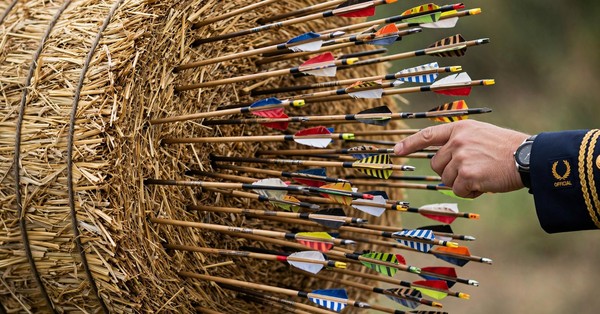
This is the part of teer arrow shooting that newcomers find most fascinating, because it is where sport becomes arithmetic. When a round ends, shooting stops immediately. Officials step in and begin the count, and this is done carefully and in the open. Every arrow still embedded in the straw target is counted, one by one. Arrows that fell to the ground, bounced off, or missed entirely do not count. Only arrows sticking in the target at the end of the allotted time make it into the tally.
The Counting Process
Counting 1,500 possible hits by hand sounds chaotic, but the officials have a system refined over decades. They work around the cylinder methodically, often in pairs, calling out subtotals as they go. Witnesses watch the process, and the atmosphere during the count is tense in a way the shooting is not. The shooting is loud and fast; the counting is quiet and deliberate. When the final tally is agreed, the last two digits become the official result for that round. A count of 1,053 hits declares 53. A count of 940 declares 40.
A Worked Example
Imagine a first round where the 50 archers release their full 1,500 arrows. Suppose 70 percent find the straw, which is a plausible hit rate for skilled archers on the larger target. That gives 1,050 arrows in the target, and the declared result is 50. Now imagine a windier second round where only 600 of the 1,000 arrows stick. The result is 00, the double-zero every player both fears and loves. These are example numbers only, not real results, but they show exactly how the last-two-digits rule converts a physical count into a betting outcome.
Why Two Rounds Instead of One
The two-round structure is older than the modern game and it serves several purposes at once. For the betting side, two rounds mean two results per day per market, which doubles the engagement without doubling the infrastructure. For the archery side, the second round gives the archers a fresh start on a smaller target, which tests a slightly different skill: precision under a tighter clock rather than volume. For the crowd, the hour between rounds is social time, and the rhythm of shoot, count, wait, shoot, count gives the afternoon a shape that a single round could never provide.
There is also a fairness argument. A single round could be skewed by a gust of wind or a few minutes of bad light. Two rounds dilute the effect of any single moment of luck. The association’s format, 30 arrows then 20, larger target then smaller, has survived because it works for the archers, the counters, the bookmakers, and the spectators all at once.
What Can Change the Arrow Count
The 1,500 and 1,000 maximums are the standard, but the real world occasionally edits them. On the seventh day of the club cycle, when all 12 clubs contribute archers, the lineup can look different from the usual two-clubs-plus-association arrangement. During unusual periods, such as the pandemic-era distancing rules reported by the Times of India, the number of shooters was temporarily reduced, which lowered the maximum arrows accordingly. Weather can also intervene: heavy rain has been known to disrupt sessions, and any round that cannot be completed fairly cannot produce a trustworthy count.
Equipment matters too. Archers bring their own bows and arrows, simple wooden gear rather than modern composite equipment, and a broken bow mid-round means one archer’s contribution stops.

None of these variations change the rules, but they change the totals, which is why the counted hits, not the theoretical maximum, are the only numbers that ever get declared.
Players tracking multiple markets sometimes compare formats across grounds on the Juwai teer result page, since Juwai runs its own sessions under its own local arrangements while following the same two-round logic.
How the Numbers Stay Honest
With money riding on the count, integrity is everything, and the system has layers. The game is legal only because the Meghalaya Amusements and Betting Tax (Amendment) Act of 1982 permits it, and licensed operators work under state oversight. The counting happens in view of witnesses. The archers are registered club members, not random volunteers. Ticket counters are licensed, and the payout structure is fixed and public: commonly Rs 80 for every Re 1 staked on a correct first-round number and Rs 60 for the second round, as widely reported.
None of this means you should treat teer as income. It is a legal lottery in Meghalaya for adults aged 18 and above, and like every lottery it is designed so the house keeps a margin. Play only what you can afford to lose, and treat the archery as the entertainment it is.
Frequently Asked Questions
How many arrows are shot in the first round of teer?
In the standard format, 50 archers each shoot 30 arrows in the first round, which means a maximum of 1,500 arrows. The number that actually hits the target is always lower and is counted by hand after the round. The declared result is the last two digits of that hit count.
How many arrows are shot in the second round of teer?
Each of the 50 archers shoots 20 arrows in the second round, for a maximum of 1,000 arrows. The round is shorter than the first, the target is smaller, and the hit count is converted to a result using the same last-two-digits rule.
How many archers participate in a teer session?
The standard lineup is 50 archers. On a normal day, two of the 12 affiliated clubs contribute 10 archers each and the Khasi Hills Archery Sports Association supplies 30. On the seventh day of the rotation cycle, all 12 clubs contribute archers together.
Do all the arrows shot count toward the result?
No. Only arrows that are stuck in the target when the round ends are counted. Arrows that miss, bounce off, or fall to the ground are not part of the tally. The result is the last two digits of the stuck-arrow count.
How long does each teer round last?
Round lengths are short, commonly described as a few minutes each, with the first round slightly longer than the second. The exact timing can vary by ground and day, which is why result pages publish declaration updates rather than fixed promises.
Where can I see the official daily results?
Declared results are published by licensed counters and result portals after officials finish counting. This site’s teer result list page carries the daily declared figures for the major markets.
A Final Word on the Flying Arrows
So how many arrows in teer? The honest answer has two layers. The format promises up to 1,500 arrows in the first round and 1,000 in the second, loosed by 50 registered archers in a matter of minutes. The results promise only whatever fraction of those arrows the straw target catches, reduced to two digits by the oldest rule in the game. Everything between those two numbers, the draw of the bow, the arc of the shaft, the thud into straw, the slow hand-count, is what makes teer feel less like a lottery and more like a living tradition. Watch a round once, and the numbers on the board will never look abstract again.
For background on the sport’s history, the Teer article on Wikipedia gives a useful overview, and the Government of Meghalaya portal is the official source for the state’s regulatory framework. Remember that teer is a legal lottery in Meghalaya for adults 18 and over; participate responsibly and only through licensed counters.