
Looking for a khanapara teer previous result is one of the most common things visitors do on a teer result website. Whether you missed the live declaration, want to double check a number you noted down, or simply keep a personal record of past outcomes, the archive of previous results is the most reliable place to look. This guide explains exactly what the Khanapara Teer previous result archive contains, how the records are organized, how to find any past date quickly, and how to read the numbers correctly so you never misinterpret an old result.
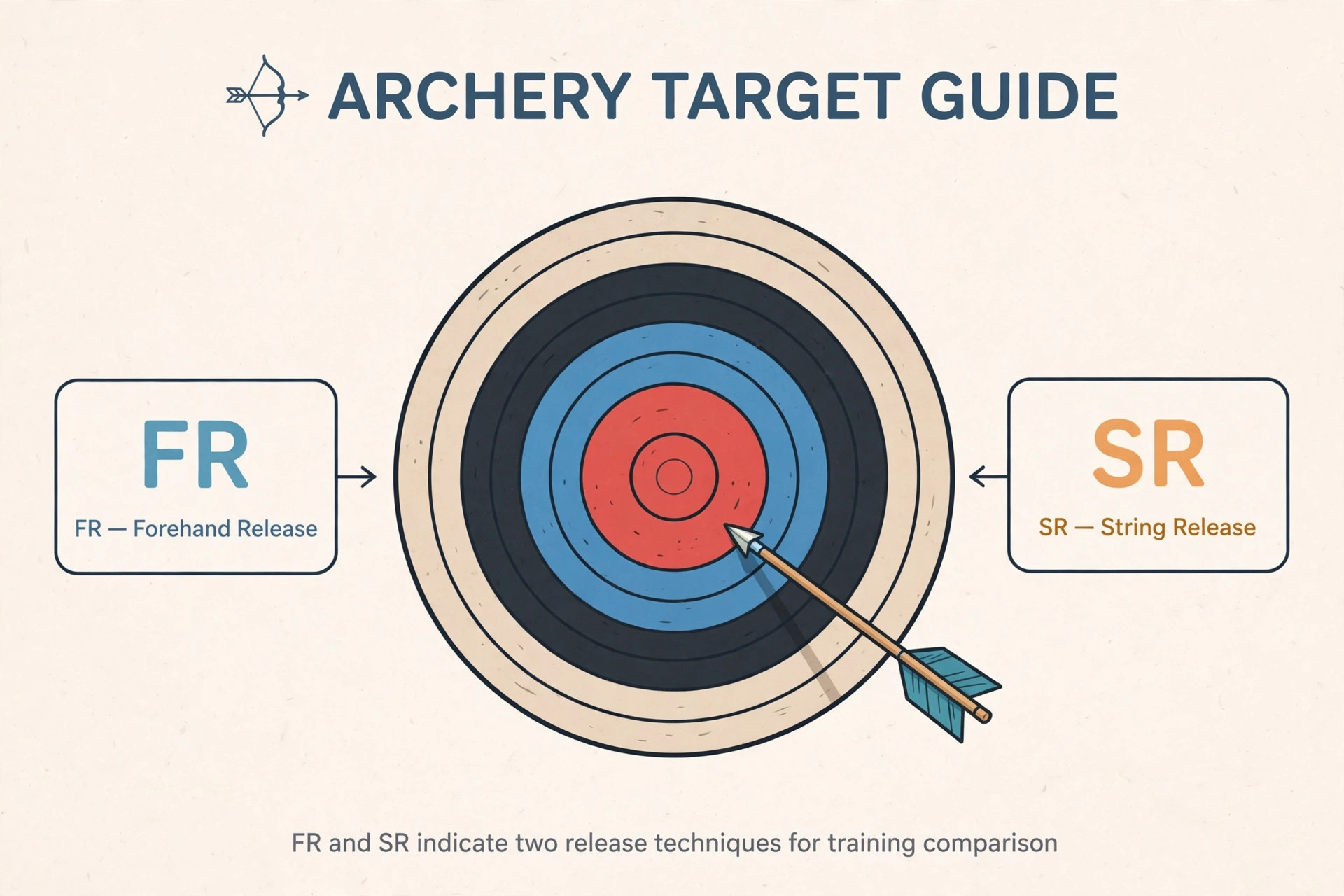
Khanapara Teer is an archery based lottery game played in Khanapara, near Guwahati in Assam. Every playing day has two rounds, called the first round (FR) and the second round (SR). In each round, archers shoot arrows at a target, and the last two digits of the total number of arrows that hit the target become the winning number for that round. Because each round produces one two digit number, every date in the archive carries two numbers, one for FR and one for SR. Understanding this simple structure is the key to using any previous result record with confidence.
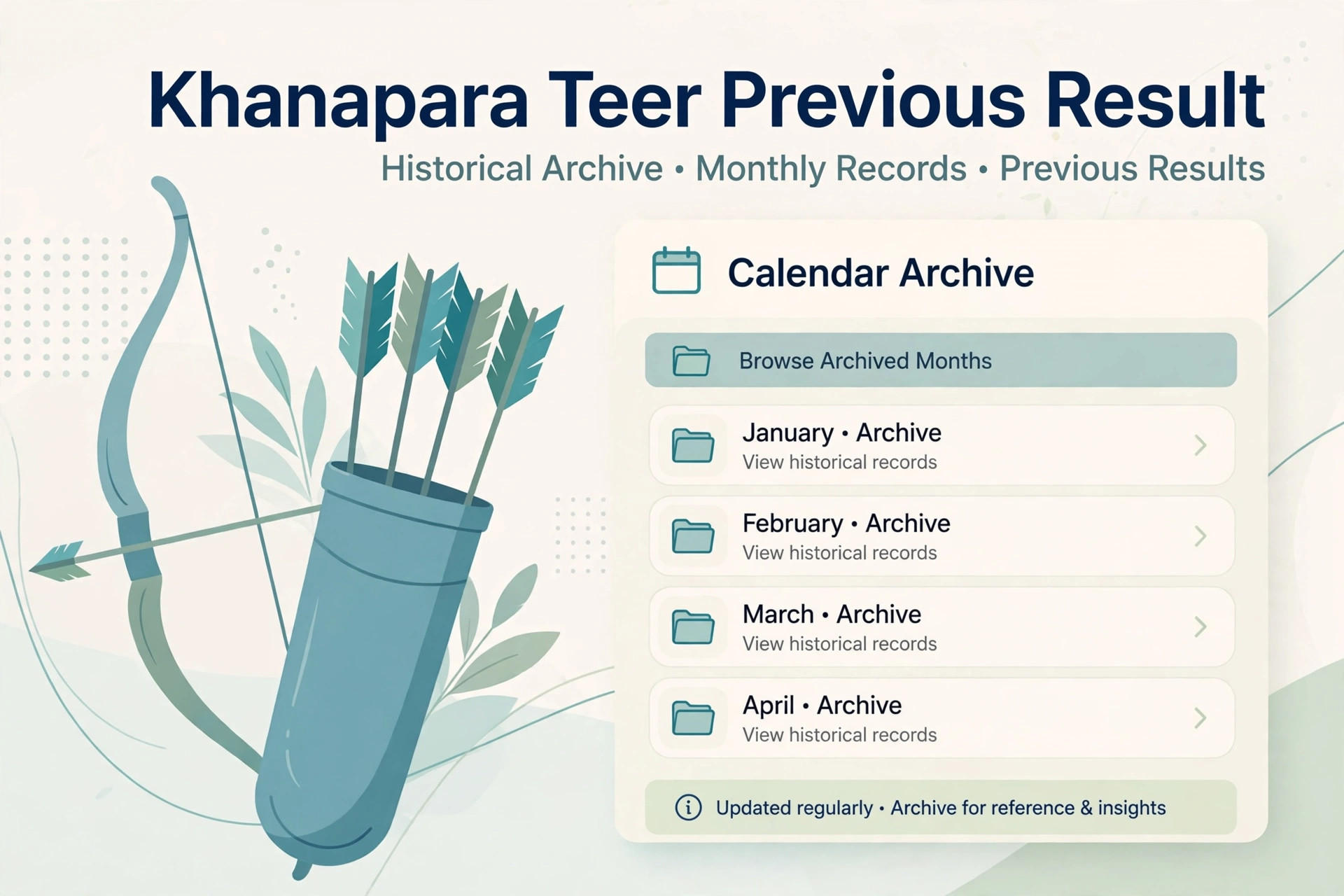
What the Khanapara Teer Previous Result Archive Contains
The khanapara teer previous result archive is a date wise collection of declared outcomes. Each entry in the archive represents one playing day and stores the FR number and the SR number that were officially declared on that date. The newest dates appear first, and older dates follow in reverse chronological order, so the result you are looking for is usually only a short scroll away.
A well maintained archive entry contains more than just two numbers. It typically shows the full date, including the day of the week, the FR number, the SR number, and sometimes the declaration time of each round. Some archives also mark special days, such as Sundays or public holidays, when no game is held and no result is declared. When you see a blank or a dash in place of a number, it means there was no declared result for that round on that date, not that the number was zero. This distinction matters, because a genuine winning number can itself be 00, and you should never confuse a real 00 result with a missing entry.
The archive on the All Teer Results homepage is updated every playing day, so the previous result records stay current. Keeping the archive complete matters because visitors often need to look back several days or weeks, and a gap in the records forces them to search elsewhere, where they may find unreliable information.
Why archives keep both rounds separately
FR and SR are two independent rounds of the same game, and their numbers are never interchangeable. The first round is declared earlier in the day, and the second round follows later. Each round has its own set of archers, its own shooting session, and its own count. When you look up a khanapara teer previous result, always note which round a number belongs to. Mixing up an FR number with an SR number is one of the most frequent mistakes readers make, and it is completely avoidable once you understand that the archive always labels the two columns separately.
How far back archives usually go
Most online archives keep at least thirty days of previous results, and many keep several months. A thirty day window is enough for the vast majority of lookups, because people usually want yesterday’s result, last week’s results, or the results from a specific recent date. Longer histories are useful for readers who maintain their own long term records. If you need a result older than what the visible archive shows, the teer result list page often carries extended records worth checking.
How FR and SR Numbers Are Recorded Each Day
Every Khanapara Teer playing day follows the same rhythm. The first round takes place in the afternoon, and its number is declared first. The second round follows, and its number is declared after the first round shooting is complete. The archive records these in order, FR first and SR second, mirroring the real sequence of the day.
Result numbers are always two digits, from 00 to 99. Leading zeros are preserved, so a result of 7 is always written as 07. This is not a cosmetic choice. In teer, 07 and 70 are completely different outcomes, and dropping the leading zero would corrupt the record. When you read a khanapara teer previous result, treat every number as exactly two characters. If you copy numbers into your own notebook or spreadsheet, keep the leading zero intact, or format the cell as text so spreadsheet software does not strip it.
It is also worth knowing that result declaration can occasionally be delayed. Weather, technical issues at the ground, or administrative reasons can push a declaration later than usual. A good archive notes the actual declaration time or at least marks delayed entries, so readers know the record reflects what was officially declared and when. If you check the archive and find today’s FR number missing while yesterday’s full entry is present, the most likely explanation is a delayed declaration, not an error in the archive.
How to Find a Khanapara Teer Previous Result by Date
Finding a specific past date is straightforward once you know how the archive is laid out. Start from the most recent entries and work backward. Because entries are ordered newest first, yesterday’s result is usually right at the top, just below today’s live result. For dates further back, most archives offer one of three navigation methods: continuous scrolling, pagination with page numbers, or a month and year selector.
Using the date wise list
The simplest method is the date wise list, where each row shows one date with its FR and SR numbers. Scan the date column until you reach the date you want, then read across the row. This method is fastest for recent dates, roughly within the last two weeks. The Khanapara Teer result page shows the current day’s numbers prominently, and the archive section below it carries the previous days in the same format, so the visual language stays consistent as you scroll back.
Using month based navigation
For older dates, month based navigation saves a lot of scrolling. Select the month and year, and the archive displays every playing day of that month in one view. This is the best approach when you need, for example, all the results from two months ago, or when you are compiling a monthly record for your own files. Remember that months have non playing days, so do not be surprised to see gaps in the monthly grid. Those gaps represent Sundays and holidays, not missing data.
Searching within the archive page
If the archive page has a search or filter box, you can type a date directly. Use the same date format the archive uses, usually day month year, to get an exact match. This is the quickest method of all when you know the precise date you need. If no search box exists, your browser’s find function works well on list style archives: open the find dialog, type the date, and jump straight to the matching row.
Reading the Khanapara Teer Result List Correctly
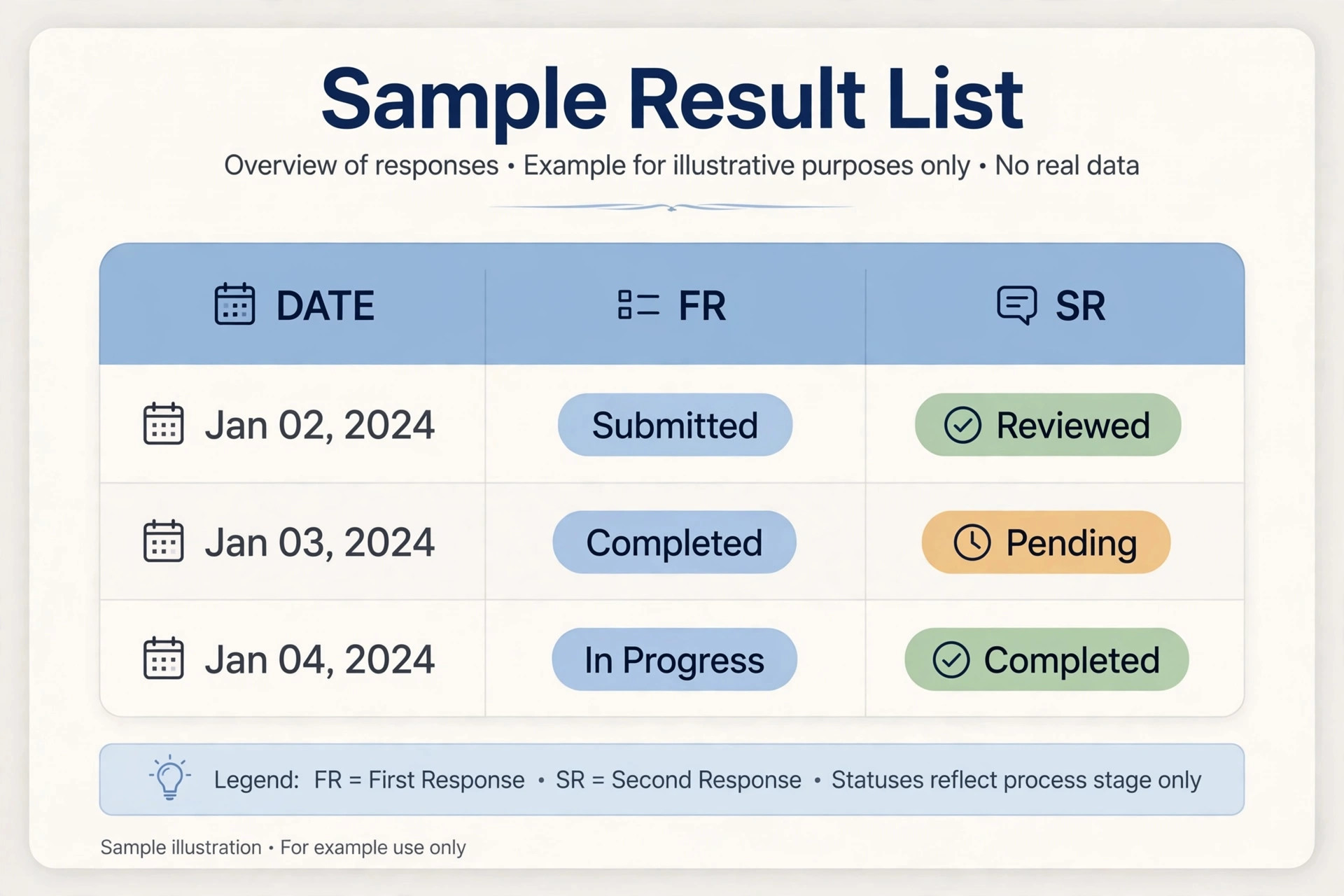
The khanapara teer result list is the backbone of the previous result archive, so reading it correctly deserves special attention. A typical list has four columns: date, day, FR, and SR. The date column identifies the playing day. The FR column holds the first round number. The SR column holds the second round number. Some lists add a fifth column for remarks, used for notes like delayed declarations or special announcements.
Read each row left to right as a complete story of one day: on this date, the first round declared this number, and the second round declared this number. Never read a column top to bottom as if it were a sequence with meaning beyond chronology. The numbers in the FR column from consecutive days have no mathematical relationship to each other. Each day’s game is an independent event, and the archive presents them in order purely for reference convenience.
Pay attention to the placeholder symbols. A dash or an empty cell means no result was declared. The number 00 is a valid declared result and looks similar to a placeholder at a glance, so read carefully. If you are ever unsure whether a cell shows a real 00 or a missing value, check the remarks column or look at whether the neighboring round for the same date has a number. On a normal playing day, both FR and SR are declared, so a row with one real number and one dash deserves a second look.

Khanapara Teer Chart Formats: Weekly and Monthly Views
Beyond the simple list, many readers use the khanapara teer chart, which arranges previous results in a grid. In a weekly chart, each row represents one week, and the columns represent the playing days from Monday to Saturday. Each cell contains the FR and SR numbers for that day, often stacked with FR on top and SR below. This layout lets you scan an entire week at a glance, which is convenient when you want to review a full week of play without scrolling through a long list.
The monthly chart works the same way on a larger scale, with four to five weekly rows covering the month. Monthly charts are popular with readers who keep long term personal records, because one screen shows the whole month’s declared outcomes. When you use a chart, always confirm which number in each cell is FR and which is SR. Chart designers usually keep FR on top consistently, but a quick check of the chart legend removes all doubt.
Charts and lists contain the same underlying data, so neither is more accurate than the other. Choose the format that suits your purpose. Use the list when you need one specific date quickly. Use the chart when you want to review a week or a month as a whole. Both draw from the same declared results, and both should match each other exactly for any given date.
What a chart cannot tell you
A chart shows what was declared, nothing more. It does not show why a particular number came up, and it does not contain any hint about future numbers. Every round is decided by the archery shooting of that round alone. Past numbers are useful as records, for verification, and for personal bookkeeping, but they have no influence on upcoming rounds. Any website that suggests otherwise is misleading you, and you should treat its other claims with the same skepticism.
Morning and Day Sessions in the Archive
Khanapara Teer actually runs in two separate sessions, and the archive keeps them distinct. The Khanapara Morning Teer session is held in the late morning, with its own FR and SR rounds, while the main Khanapara Teer day session is held in the afternoon with its own FR and SR rounds. These are separate games with separate results, and their archives must never be mixed.
When you look up a khanapara teer previous result, first confirm which session you mean. If you played or followed the morning session, look in the morning archive. The Khanapara Morning Teer result page carries the morning session’s current and previous results separately from the day session. Mixing a morning FR number into a day session record, or vice versa, creates exactly the kind of confusion that careful archive design tries to prevent.
The two sessions also have different declaration timings. Morning round numbers are declared around late morning, while the day session numbers are declared in the afternoon. Archives usually label each session clearly at the top of its section. If you ever find an archive page where the session is not labeled, treat the numbers with caution and cross check against a labeled source before relying on them.
Common Mistakes When Using Old Results
Even experienced readers make avoidable errors with previous result records. The most common is the session mix up described above: using a morning session number when you meant the day session. The second most common is the round mix up: reading an SR number as if it were the FR number. Both mistakes come from rushing. Slow down, read the column headings, and confirm the session label before you note anything down.
A third mistake is trusting screenshots and forwarded messages over the archive. Teer result screenshots circulate widely on messaging apps, and many are outdated, edited, or simply wrong. Someone forwards last week’s result as if it were today’s, or a number gets altered as the image is recompressed and shared. The archive on a maintained result website is always more trustworthy than a random forwarded image, because the archive is updated from declared outcomes and can be corrected if an error is spotted.
A fourth mistake is misreading the date format. Some archives use day month year order while others use month day year order, and a date like 05 06 can mean May 6 or June 5 depending on the convention. Check the archive’s date format once, using a date you already know, and then read all other dates with that format in mind. This single check eliminates a whole class of lookup errors.
Finally, never treat a previous result as a prediction. Old numbers are records of what happened, not clues about what will happen. Keeping personal records is fine, and reviewing them can be interesting, but no pattern in past results changes the odds of any future round. Responsible readers enjoy the archive for what it is: a reliable history of declared outcomes.
How to Verify a Khanapara Old Teer Result
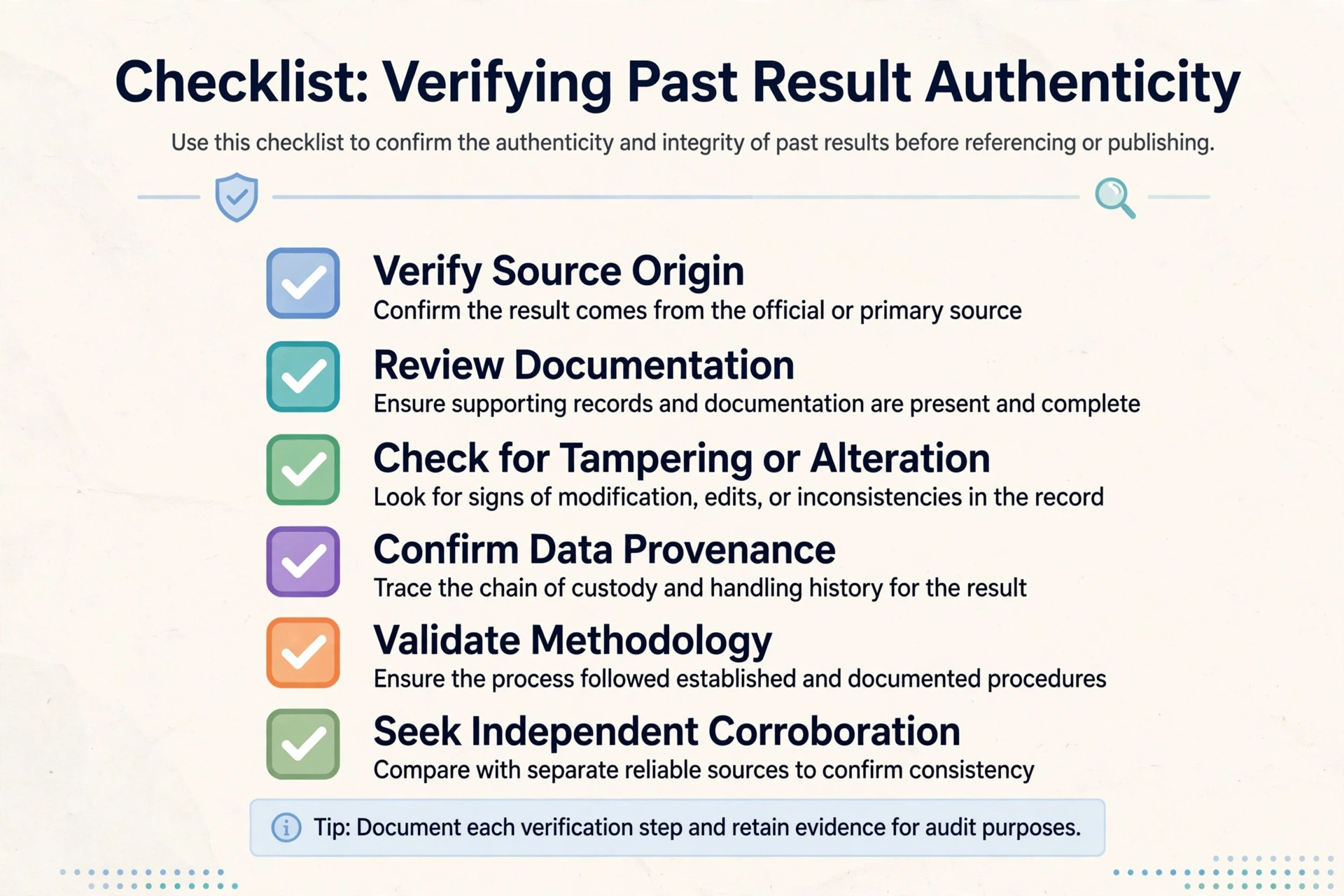
Sometimes you need to be certain about a khanapara old teer result, perhaps because you are settling a friendly discussion or reconciling your own records. Verification is simple and takes only a minute. First, note the exact date, session (morning or day), and round (FR or SR) of the number in question. Then check the archive entry for that date and confirm all three match: same date, same session, same round.
For extra confidence, cross check against a second independent source. Two archives that agree on the same date, session, round, and number give you a solid verification. If they disagree, do not guess. Wait and check a third source, or look for an official announcement. Declared results are public information, and genuine discrepancies between archives are rare and usually corrected quickly.
Be especially careful with results claimed for non playing days. If someone quotes a Khanapara Teer number for a Sunday, that number cannot be genuine, because no game is held on Sundays. The archive is your friend here: a blank Sunday row confirms that no result was declared, and any number claimed for that date can be dismissed immediately.
Frequently Asked Questions
Where can I find the Khanapara Teer previous result for yesterday?
Yesterday’s result is at the top of the previous result archive, directly below today’s live numbers. Open the Khanapara Teer result page and scroll to the archive section. The first archive row is almost always yesterday’s date, showing both the FR and SR numbers, unless yesterday was a Sunday or a holiday, in which case the archive shows a blank row and the most recent playing day appears first instead.
What is the difference between FR and SR in previous results?
FR stands for the first round and SR stands for the second round. They are two separate archery shooting sessions held on the same day, each producing its own two digit winning number. In the archive, FR and SR appear as two separate columns for every date. A previous result is only complete when you know both numbers and which round each belongs to.
How far back do Khanapara Teer previous result records go?
It depends on the archive, but most maintained archives keep at least thirty days of records, and many keep several months. For dates within the last month, the standard archive view is enough. For older dates, use the month based navigation or the extended result list page. Records older than a few months are rarely needed, but long running archives do exist for readers who keep extended personal histories.
Why does the archive show a dash instead of a number for some dates?
A dash or blank cell means no result was declared for that round on that date. This happens on Sundays, when no game is held, and on public holidays when the game is suspended. It can also happen if a round was cancelled for an exceptional reason. A dash is not the same as the number 00, which is a genuine declared result. Always read dashes as missing declarations, not as zero.
Can previous results help predict future Khanapara Teer numbers?
No. Each round is an independent archery event, and past numbers have no effect on future outcomes. Previous results are useful as records, for verification, and for personal bookkeeping, but they cannot improve anyone’s chances in an upcoming round. Any claim that a pattern in old results predicts new numbers is misleading, and you should not make decisions based on it.
Are Khanapara Morning Teer previous results stored separately?
Yes. The morning session and the day session are separate games with separate FR and SR rounds, so their previous results live in separate archives. When you look up an old number, confirm whether it belongs to the morning session or the day session first, then open the matching archive. Mixing the two sessions is one of the most common lookup mistakes.
Conclusion
The khanapara teer previous result archive is a simple tool that rewards careful use. Know the structure: every playing day has an FR number and an SR number, morning and day sessions are separate, and blanks mean no declaration, not zero. Use the date wise list for quick lookups, the chart views for weekly or monthly reviews, and cross check against a second source whenever certainty matters. Keep your own records tidy, preserve leading zeros, and never mistake history for prediction. With these habits, the archive will serve you reliably every time you need to look back.
Legal Status and Responsible Play
Teer is a legal lottery game in Meghalaya, regulated by the state government, and participation is open to adults aged 18 and above only. If you want to confirm the regulatory position, the Government of Meghalaya portal is the official source for state notifications. As with any lottery, treat teer as entertainment and never wager more than you can comfortably afford to lose.
Teer is a legal lottery game in Meghalaya, open to adults aged 18 and above only. Please play responsibly.